A crypto debit card lets you spend Bitcoin, Ethereum, or stablecoins anywhere Visa or Mastercard is accepted, converting your balance into local currency the moment you tap or swipe. The market has matured fast: Visa now powers more than 130 stablecoin-linked card programs, and Mastercard has expanded stablecoin settlement across Europe. The best pick depends on whether you want cashback, self-custody, low fees, or simplicity, since no single card wins in every category. This guide compares the top options on fees, rewards, custody model, and regional availability so you can match a card to how you actually spend.
Quick answer: the best crypto debit cards in 2026
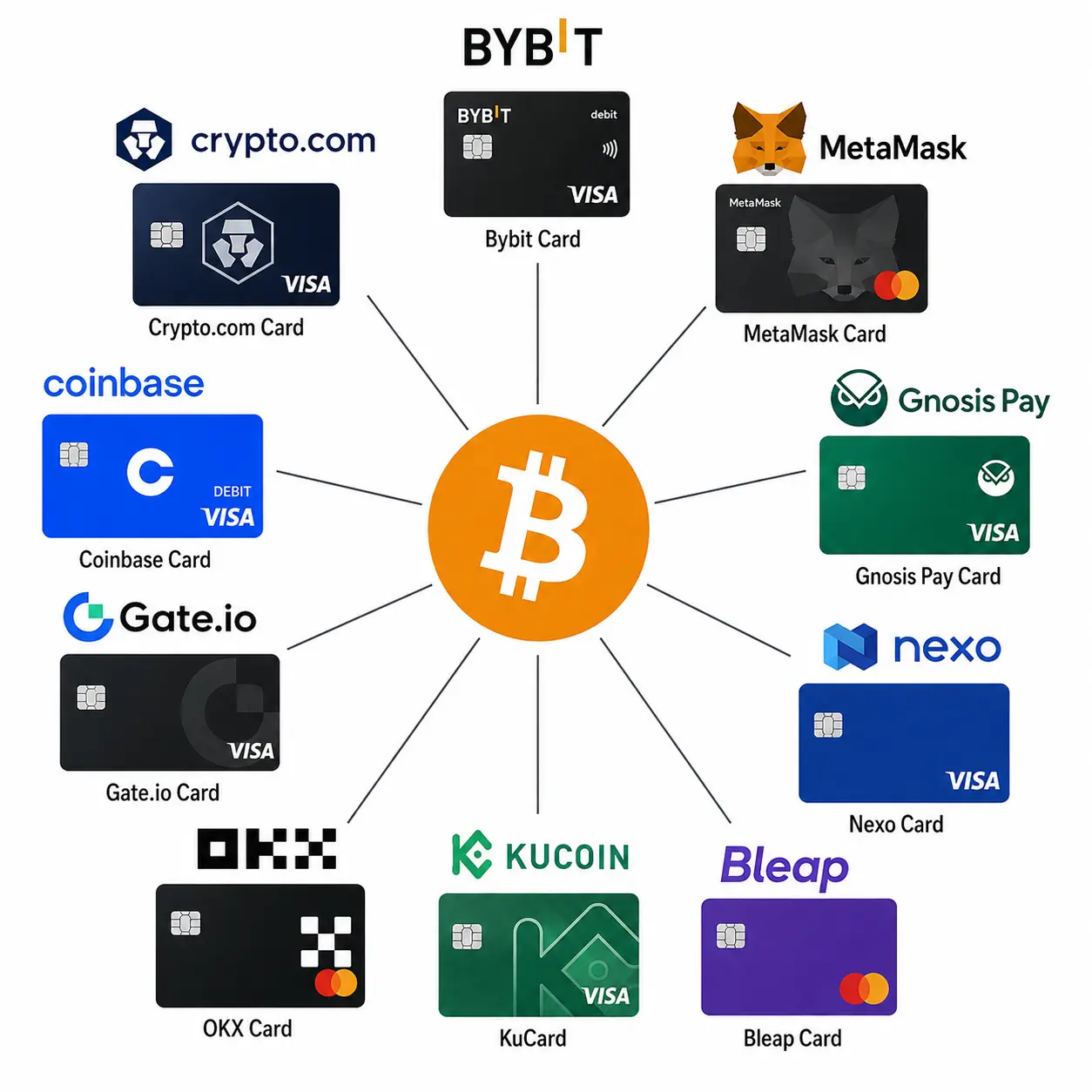
| Card | Network | Best for | Cashback | FX fee | Staking required | Custody | Region |
|---|---|---|---|---|---|---|---|
| Bybit Card | Visa/Mastercard | Overall, no staking | 2-10% | 1% | No | Custodial | 30+ countries |
| Crypto.com Card | Visa | Rewards and travel | 0-5% | 0.2-2% | Yes (top tiers) | Custodial | Global |
| MetaMask Card | Mastercard | Self-custody, US | 1-3% | 0% (Metal) | No | Self-custodial | US |
| Gnosis Pay | Visa | Self-custody, EU | Up to 4% | 0% | GNO for top rewards | Self-custodial | EEA/UK |
| Coinbase Card | Visa | US beginners | Up to 4% | 3% | No | Custodial | US only |
| Gate.io Card | Visa/Mastercard | Multi-crypto, travel | 1-7% | 0.2-2% | No | Custodial | EEA + Argentina |
| Nexo Card | Visa | Borrowing without selling | 0.5-2% | 0.2% | No | Custodial | EEA/UK |
| OKX Card | Mastercard | Stablecoin spending, EU | Up to 5% | 0% | No | Self-custodial | EEA |
| KuCard | Visa | EEA residents | 3% | 2% | No | Custodial | EEA only |
| Bleap | Mastercard | 0% FX, stablecoins | 2% USDC | 0% | No | Self-custodial | Global |
What is a crypto debit card and how does it work?
A crypto debit card links to a cryptocurrency balance instead of a bank account. When you pay, the card provider converts the required amount of crypto into the merchant’s local currency on the spot, so the transaction settles in dollars or euros even though your underlying balance is in Bitcoin, Ethereum, or a stablecoin. Because these cards run on the Visa or Mastercard networks, they work at more than 150 million merchants worldwide, the same acceptance footprint as any standard bank card. The mechanics behind a digital asset like Bitcoin are explained in the guide to what is Bitcoin.
What happens at the point of sale
When you tap a crypto debit card, the provider checks your available balance, holds the equivalent amount of crypto, and instantly converts it into fiat through what the industry calls a liquidity bridge. That bridge is what lets a card issuer promise cash to Visa or Mastercard within moments of your purchase, even though your balance never left crypto until that instant. From the merchant’s side, the transaction looks identical to any other card payment: there is no special crypto acceptance required, because the conversion happens before the funds reach the merchant’s bank.
Crypto debit card vs prepaid card
A prepaid card requires you to load funds onto it in advance, usually by transferring crypto or cash from another source, and you then spend down that pre-loaded balance. A true crypto debit card pulls directly from your live wallet or exchange balance at the time of purchase, with no separate loading step. Prepaid models can help separate “spending money” from your main holdings, but they add an extra step and sometimes a top-up fee. Most major cards today, including Coinbase Card and Bybit Card, work as direct debit-style products rather than prepaid cards.
Crypto debit card vs crypto credit card
A crypto debit card spends what you already hold. A crypto credit card lets you borrow against your crypto as collateral instead of selling it. The debit model triggers a disposal of your asset every time you spend, which can be a taxable event in many jurisdictions. The credit model, used by cards such as Nexo in Credit Mode, avoids that disposal because you are not selling anything, you are borrowing against it. The tradeoff is liquidation risk: if your collateral’s value drops sharply, the issuer can force a sale to cover the loan. Anyone deciding between the two should understand collateral requirements, interest rates, and how a market downturn affects borrowing power before chasing rewards alone.
Custodial vs self-custodial crypto cards
A custodial card means the provider, typically an exchange, holds your crypto balance on your behalf. You are trusting that platform’s account-recovery process and security posture, the same way you would trust a bank. Coinbase Card, Bybit Card, Crypto.com Card, and Nexo Card all work this way. A self-custodial card keeps your crypto in a wallet you control, with the conversion to fiat happening only at the exact moment of payment. MetaMask Card, Gnosis Pay, OKX Card, and Bleap follow this model. Self-custodial cards remove the counterparty risk of a platform holding your funds, but they require more comfort managing your own wallet and seed phrase. The difference between these two custody types more broadly is covered in the guide to custodial vs non-custodial wallets.
What to look for before choosing a crypto debit card
Headline numbers rarely tell the full story. A card advertising “up to 10% cashback” or “0% fees” can still cost you more than a competitor once you account for caps, spreads, and staking requirements.
FX fees, conversion spreads, and ATM costs
Three separate charges get bundled together in marketing copy but hit your statement differently. An FX fee, sometimes called a foreign transaction fee, applies when you spend in a currency other than your card’s base currency. A conversion fee or spread is the markup the issuer applies when converting your crypto into fiat, separate from any FX charge. An ATM fee applies specifically to cash withdrawals, often on top of whatever fee the ATM operator itself charges. A card that markets “0% FX” can still carry a meaningful conversion spread on the crypto-to-fiat leg of the transaction, so checking both numbers matters more than checking either one alone.
Cashback: headline rate vs what you actually earn
Most advertised cashback rates assume the top tier, the maximum stake, and spending patterns that few users hit. Crypto.com’s 5% top rate requires the Obsidian tier, which means locking a large amount of CRO. Wirex advertises up to 8% Cryptoback, but reaching that figure requires staking WXT and meeting a monthly spend threshold; without a stake, the rate typically sits closer to 1-2%. Plutus advertises 3% cashback, but caps and a subscription fee mean most users land closer to 0.75-1.5% in practice. The gap between the headline rate and the effective rate you actually earn after caps, tiers, and fees is the single most misleading number in crypto card marketing. Before applying, look for the realistic rate a typical user earns, not the rate reserved for the highest tier.
Staking requirements and the hidden cost of locking tokens
Several cards tie their best rewards to staking the issuer’s native token. Crypto.com’s higher tiers require locking thousands of dollars in CRO. Wirex requires WXT. This creates a hidden cost beyond the obvious one: your locked tokens carry their own price risk. If CRO or WXT falls 30% while it is staked, that loss can easily exceed any cashback earned during the same period, and you also give up the opportunity to use that capital elsewhere. Staking only makes sense if you were already planning to hold that token long term, independent of the card rewards.
Regional availability and KYC requirements
Card availability splits sharply by region. Coinbase Card and MetaMask Card are US-focused. Gnosis Pay, OKX Card, KuCard, Gate.io, and Nexo concentrate on the EEA and UK. Bybit Card and Bleap have the broadest geographic reach, covering 30 or more countries and global availability respectively. Nearly every card requires full identity verification (KYC), including government ID and proof of address, before you can activate spending. Confirm your country is supported and that you are comfortable with the verification level before applying, since coverage and requirements shift as regulation evolves.
No-KYC crypto debit cards: what is available and what is limited
A small number of cards offer reduced verification, but the tradeoffs are significant. SolCard’s Virtual tier skips full KYC but carries a 5% top-up fee, a $5,000 monthly spending cap, and no Apple Pay or Google Pay support. RedotPay offers a minimal-verification starter tier, but it is capped at a $500 lifetime spending limit, making it impractical for regular use. Most major crypto cards require full KYC across all tiers. Anyone drawn to a no-KYC option should weigh the higher fees and low limits against the privacy benefit, since these products are built for occasional use rather than everyday spending.
Best crypto debit cards reviewed
The cards below cover the most common use cases: high rewards, self-custody, beginner simplicity, and low-fee international spending.
Crypto.com Visa Card: best for rewards and travel
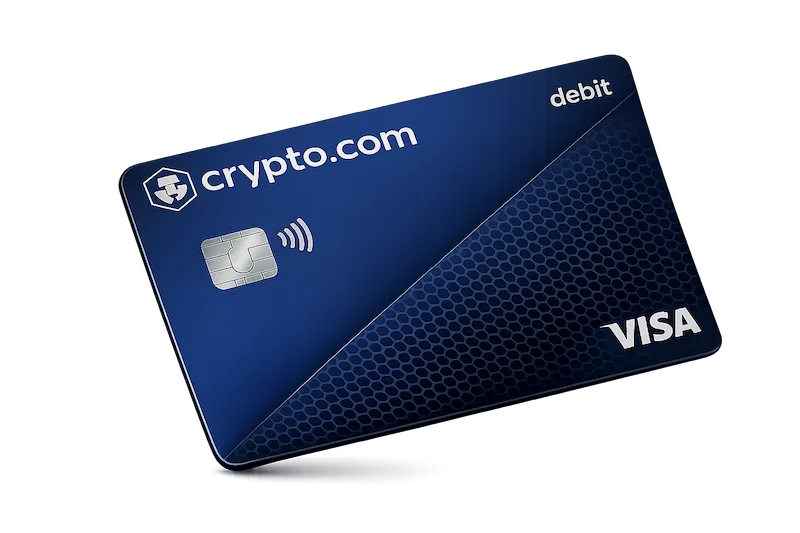
Crypto.com runs a five-tier program from Midnight Blue, which carries no stake and 0% cashback, up to Obsidian, which requires a large CRO stake and pays 5% cashback plus rebates on Spotify, Netflix, Amazon Prime, and airport lounge access through LoungeKey. The Midnight tier charges 0.2% FX within the EU and UK and 2% outside that zone; higher tiers waive the FX fee entirely. This card rewards consistent, long-term CRO holders far more than casual spenders, and the best benefits only become available once you commit meaningful capital to staking.
Bybit Card: best for no staking and fee transparency
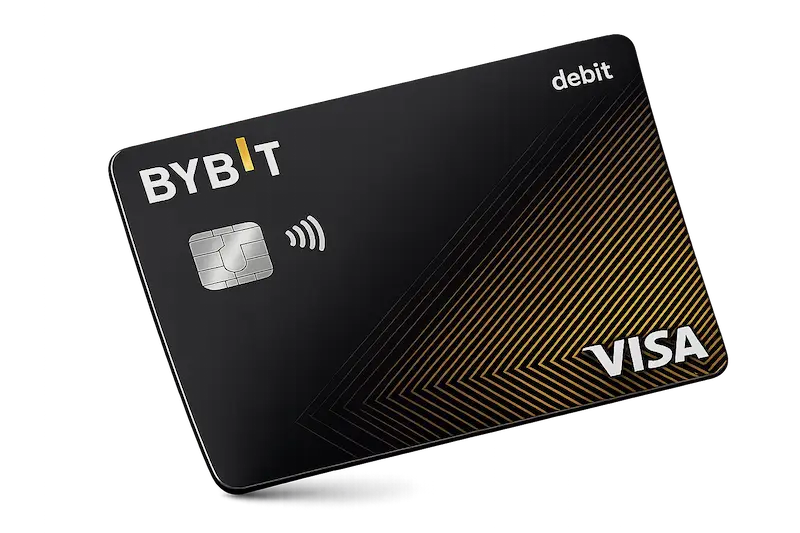
Bybit’s card pays 2-10% cashback based on your account’s VIP tier on the Bybit exchange, without requiring you to stake any specific token. It also pays up to 8% APR on idle balances through an Auto-Savings feature, and top tiers get rebates on subscriptions including Netflix, Spotify, Prime, ChatGPT, and TradingView. Fees are published clearly: a 0.9% conversion fee and a 1% FX fee, with $100 in free ATM withdrawals each month before a 2% charge applies. The card is available in more than 30 countries across Europe, South America, and Oceania, with daily spending limits up to $5,000.
MetaMask Card: best self-custodial option in the US
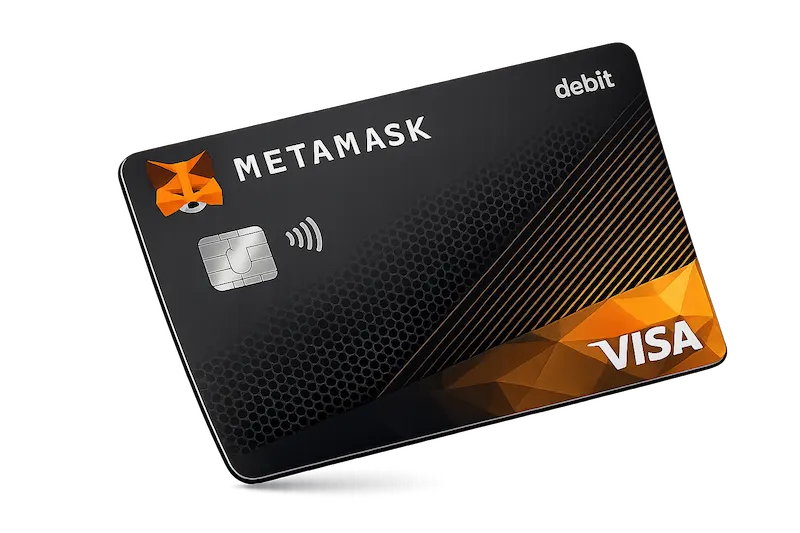
MetaMask Card launched broadly across the US in February 2026 as a Mastercard-powered card linked directly to your MetaMask wallet. Its defining feature is self-custody: your crypto stays in your wallet until the exact moment you pay, rather than sitting pre-loaded on a platform. It supports USDC, USDT, wETH, mUSD, and several yield-bearing assets like aUSDC. The virtual card is free with 1% cashback. The Metal card costs $199 per year and pays 3% cashback on the first $10,000 spent annually, with no foreign transaction fees and higher spending limits. MetaMask does not add conversion fees beyond Mastercard’s standard exchange rate.
Gnosis Pay: best self-custodial card in Europe
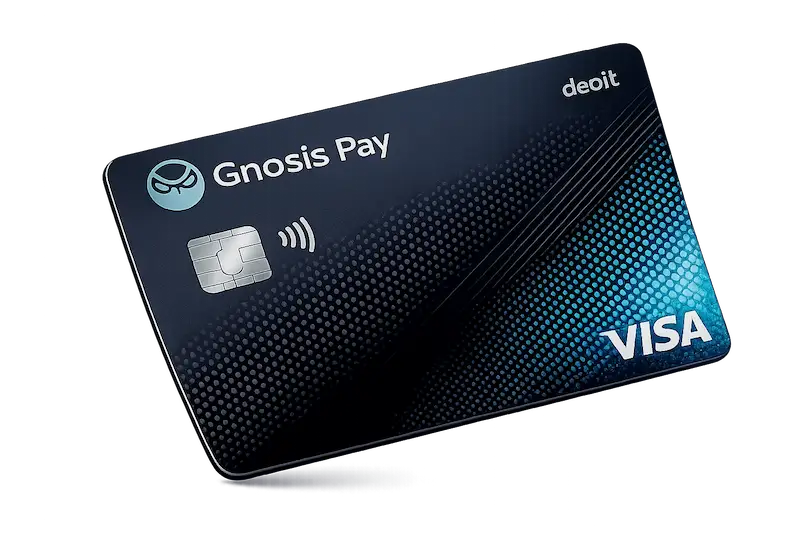
Gnosis Pay links directly to a Safe wallet, keeping your funds self-custodial rather than parked on an exchange. It pays up to 4% cashback in GNO, the platform’s token, and applies no FX markup beyond the standard Visa exchange rate. ATM withdrawals are free up to five per month or €200, whichever comes first, then 2% after that. The card focuses on the EEA and UK. Gnosis Pay suits users who want the convenience of a debit card while keeping their assets in a wallet they directly control.
Coinbase Card: best for US beginners
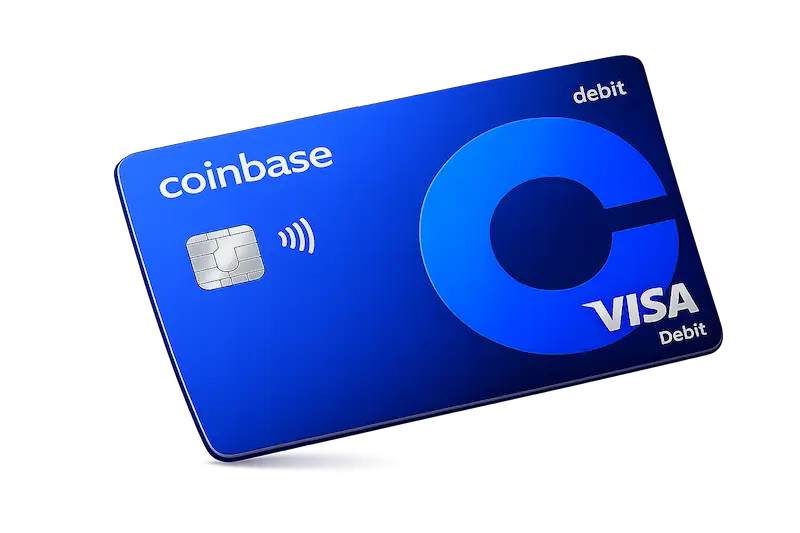
The Coinbase Card is a Visa debit card that spends directly from your Coinbase balance, with no separate wallet to manage. Rewards rotate among supported assets at up to 4% cashback, with USDC and BTC as common defaults. There is no annual fee. ATM withdrawals cost $2.50 plus whatever the ATM operator charges, and a 3% foreign transaction fee applies on international purchases. New applications were paused as of 2026, but existing cardholders can continue using the card. It remains one of the simplest entry points for US residents who already keep a Coinbase balance.
Gate.io Card: best for multi-crypto holders and travel
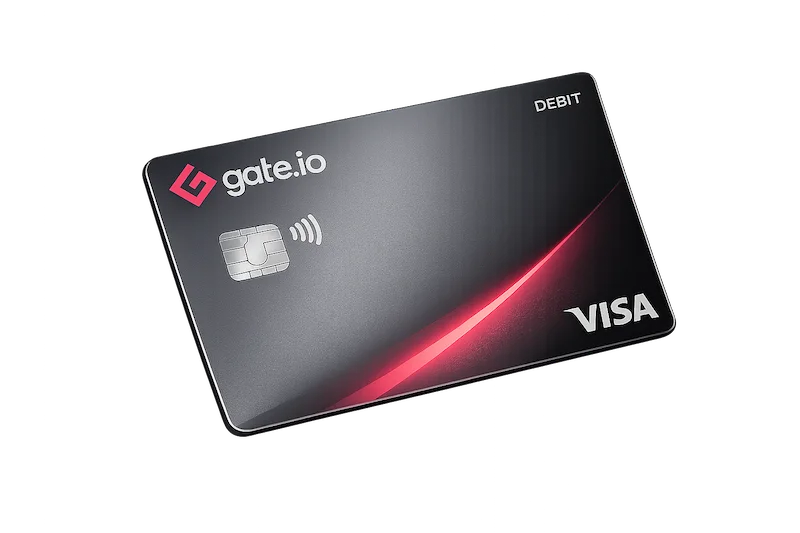
Gate.io’s card supports more than 2,000 cryptocurrencies for top-ups, making it the broadest option for holders of less common assets. Cashback runs at 1% on regular purchases, with a 2% new-user bonus and up to 7% on travel spending like flights and hotels, paid out in BTC, ETH, USDT, or the exchange’s GT token. Fees include a 0.9% conversion charge plus 0.2% on non-EUR transactions within Europe or 2% outside Europe. ATM withdrawals are free up to €200 monthly within the EEA. The card is available across the EEA and Argentina.
Nexo Card: best for holding without selling
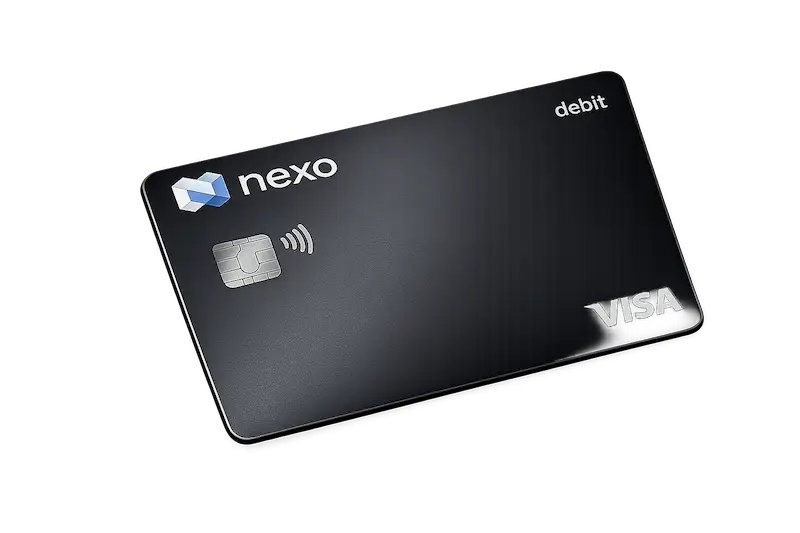
Nexo’s card is technically a credit card backed by crypto collateral rather than a true debit card, but it gets compared alongside debit options because of how users treat it. In Debit Mode, you earn 0.5-2% cashback in any supported asset or 2% in NEXO tokens, with no FX fees on EEA, UK, or Swiss currency transactions and free ATM withdrawals up to a monthly limit that scales with your loyalty tier. In Credit Mode, you spend by borrowing against your collateral instead of selling it, which can defer a taxable event in some jurisdictions, though a sharp drop in collateral value can trigger a margin call. The issuer faced regulatory action in California in January 2026, so checking current standing in your jurisdiction is worthwhile before relying on the card heavily.
OKX Card: best stablecoin card in Europe
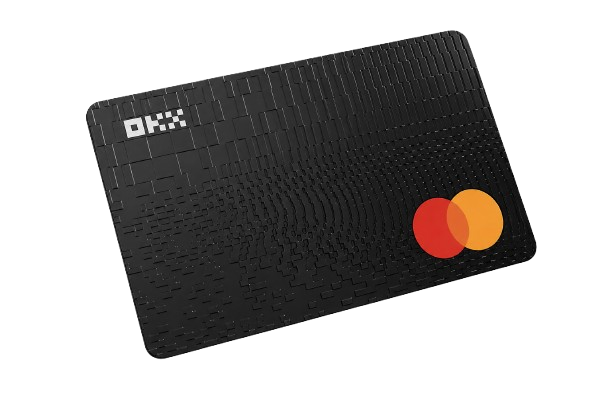
OKX’s Mastercard-powered card is built around stablecoin spending across the EEA, paying up to 5% rewards for active users of the OKX platform. It charges 0% FX, using Mastercard’s standard exchange rate rather than adding its own markup. The card is self-custodial, meaning your funds remain in your wallet rather than pre-loaded onto a platform balance. It fits the regulatory direction in Europe, where MiCA has given stablecoins a formal rulebook and pushed both Visa and Mastercard to treat them as settlement assets rather than a novelty.
KuCard: best Visa card for EEA residents
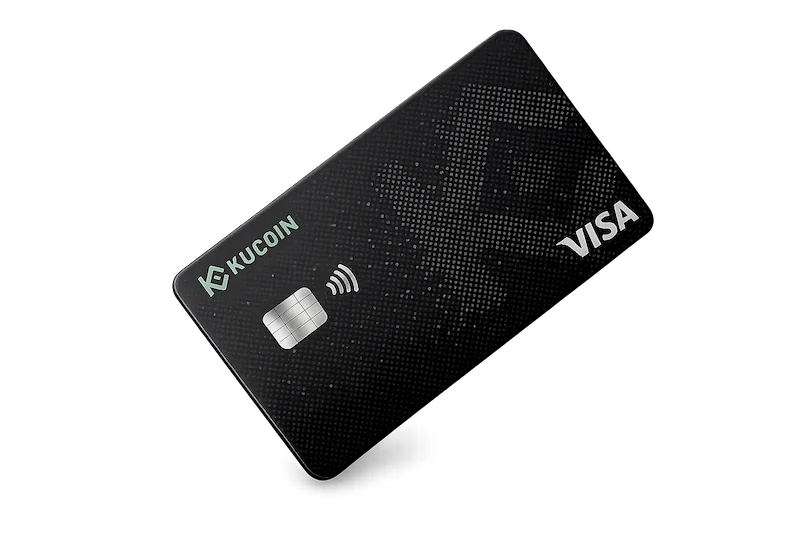
KuCard, issued by KuCoin, is accepted at roughly 90 million merchants worldwide that take Visa and converts 45 supported cryptocurrencies into euros automatically. It pays 3% cashback plus discounts at partner retailers. Fees include a 2% foreign exchange charge, a €10 annual maintenance fee, and a €9.99 physical card issuance fee, with ATM withdrawals at €1.50 within Europe or 2% outside it. The card is available only to residents of the European Economic Area who can verify with EEA-issued identification, and it currently supports euros only.
Wirex Card: best if you want high cashback and will stake WXT
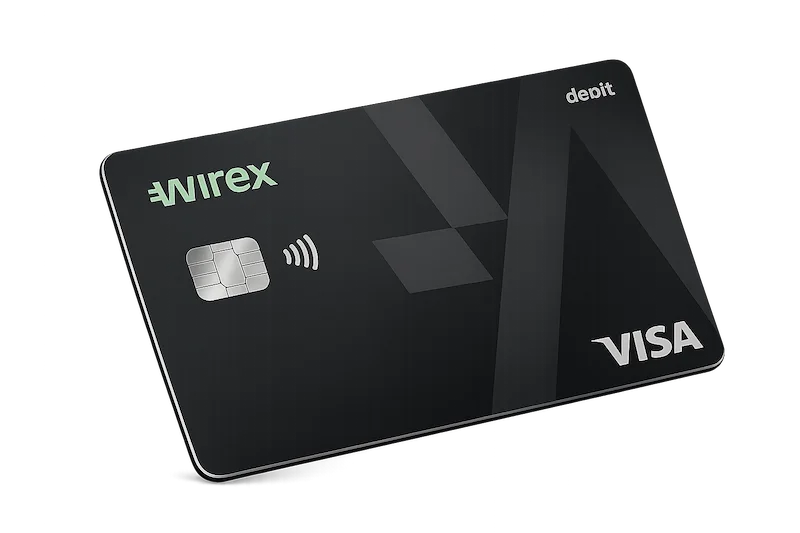
Wirex advertises up to 8% Cryptoback rewards, but the top tier requires staking WXT, the platform’s native token, and meeting a monthly spend threshold. Without a stake, the effective rate sits closer to 1-2%. Plans range from free up to €9.99 per month depending on the tier, and ATM withdrawals are free up to a monthly cap that scales with your plan. This card makes the most sense for users who already plan to hold WXT long term and spend enough each month to clear the thresholds; for everyone else, the realistic reward rate is modest.
Bleap: best for 0% FX and stablecoin spending
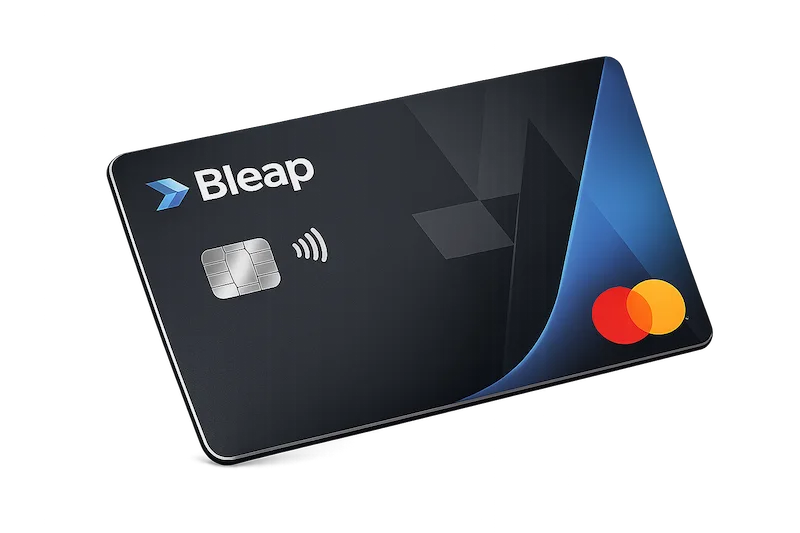
Bleap is a self-custodial Mastercard with 0% FX fees, a 2% base cashback rate in USDC, and merchant-specific cashback that can reach 20% at participating retailers. There is no monthly subscription fee. As a non-custodial product, your funds stay in your own wallet rather than on a platform balance until the moment of payment. The card is available globally, though monthly cashback caps mean heavy spenders should check current limits before assuming the full rate applies to every purchase.
Best crypto debit card by use case
The right card depends heavily on where you live, how you hold your crypto, and what you are optimizing for. The table below maps common priorities to the strongest pick.
| Use case | Best pick | Why |
|---|---|---|
| Best overall | Bybit Card | No staking required, 2-10% cashback, transparent fees, broad availability |
| Best for travel | Crypto.com (Jade tier+) / Gate.io | Airport lounge access or up to 7% travel-specific cashback |
| Best for beginners | Coinbase Card | Simple setup, $0 annual fee, direct Coinbase balance integration |
| Best for self-custody (US) | MetaMask Card | Crypto stays in your wallet until the moment you pay |
| Best for self-custody (EU) | Gnosis Pay / OKX Card | 0% FX, self-custodial, strong EEA support |
| Best for multi-crypto holders | Gate.io Card | Supports more than 2,000 cryptocurrencies |
Best crypto debit card for travel
Crypto.com’s higher tiers, starting around Jade, add airport lounge access through LoungeKey along with reduced or waived FX fees, useful for frequent flyers. Gate.io takes a different approach with up to 7% cashback specifically on travel purchases like flights and hotels. Whichever you choose, confirm the FX fee structure for the specific countries you visit most, since waivers often apply within one region but not globally.
Best crypto debit card for beginners
Coinbase Card remains the simplest starting point for US residents who already hold a Coinbase balance. There is no separate wallet to set up, no annual fee, and the rewards structure is straightforward compared to multi-tier programs. The tradeoff is a 3% foreign transaction fee, which matters if you travel internationally.
Best crypto debit card for self-custody
MetaMask Card and Gnosis Pay both keep your crypto in a wallet you control rather than a custodial balance. MetaMask Card is the stronger pick for US users given its broad February 2026 launch, while Gnosis Pay and OKX Card serve the same role for EEA and UK residents. All three remove the counterparty risk that comes with a platform holding your funds. Understanding how a self-custody wallet manages your private keys is covered in the guide to does MetaMask support Bitcoin.
Best crypto debit card in Europe
EEA residents have the widest selection of any region: Gnosis Pay and OKX Card for self-custody, Gate.io for multi-crypto support and travel rewards, KuCard for straightforward Visa acceptance, and Nexo for hybrid debit and credit functionality. Most of these cards require EEA-issued identification for verification.
Best crypto debit card in the US
US users choosing between Coinbase Card and MetaMask Card are largely choosing between custodial simplicity and self-custodial control. Bybit Card is also available to US users in some configurations and adds a no-staking cashback structure to the mix, worth comparing directly against the two more established options.
Crypto card fees compared
Fees vary enough between cards that the same spending pattern can cost meaningfully different amounts depending on which card you use. The table below lines up the core charges side by side.
| Card | Annual fee | Conversion fee | FX fee | ATM fee |
|---|---|---|---|---|
| Bybit Card | $0 | 0.9% | 1% | 2% after $100/month free |
| Crypto.com (Midnight tier) | $0 | ~1% spread | 0.2% EU/UK, 2% elsewhere | 2% above limit |
| MetaMask Card (Metal) | $199/year | Mastercard standard | 0% | Not applicable |
| Gnosis Pay | $0 | 0% | 0% (Visa rate) | 2% after €200/month free |
| Coinbase Card | $0 | Spread on conversion | 3% | $2.50 plus operator fee |
| Gate.io Card | $0 virtual / €10 physical | 0.9% | 0.2% EU, 2% elsewhere | Free up to €200/month in EEA |
| KuCard | €10/year | Spread on conversion | 2% | €1.50 EU, 2% elsewhere |
| Bleap | $0 | 0% | 0% | Varies, check current terms |
Are crypto debit cards safe?
Safety depends on the same two factors that matter for any financial product: how the platform secures your account, and how much counterparty risk you accept by trusting a third party with your funds.
Security features to look for before signing up
Strong crypto card providers offer two-factor authentication on logins and transactions, the ability to instantly freeze or unfreeze your card through the app, real-time transaction alerts, and a virtual card option for online purchases so your physical card number stays private. Individual spending limits by category and full Apple Pay, Google Pay, or Samsung Pay integration are also worth checking, since they add a layer of protection beyond the physical card itself.
- Two-factor authentication on every login and transaction
- Instant card freeze and unfreeze through the mobile app
- Real-time push notifications for every transaction
- Virtual card numbers for online purchases
- Customizable spending limits by category or merchant type
- Compatibility with Apple Pay, Google Pay, or Samsung Pay
Custodial risk: what happens if the platform fails
With a custodial card, your spending balance lives on the issuer’s platform, which means you inherit that platform’s account-recovery process, compliance posture, and solvency risk. If the platform becomes insolvent, the funds sitting in your card balance can be affected the same way a bank account is affected when a bank fails, sometimes with no deposit insurance to fall back on. Self-custodial cards remove this exposure because your crypto stays in your own wallet until the instant you spend it, so a platform failure cannot reach funds that were never held there. A practical rule for custodial cards is to keep only what you plan to spend soon on the card balance, holding the rest in your own wallet. How a cold wallet keeps the bulk of your holdings offline and out of any platform’s custody is explained in the guide to cold wallets for crypto.
Is spending crypto with a debit card taxable?
In most jurisdictions, spending crypto with a debit card counts as a disposal of that asset, the same as selling it for cash, which can trigger a taxable capital gain or loss based on how the asset’s value has changed since you acquired it. This applies whether you are buying coffee or paying rent: the tax authority generally does not care about the size of the transaction, only that a disposal occurred. Keeping accurate records of every card transaction is the only practical way to stay compliant when filing.
Stablecoin spending and why it simplifies your tax situation
Spending USDC or USDT through a crypto card is structurally simpler from a tax perspective than spending BTC or ETH. Because a stablecoin’s value is designed to stay pegged near $1, there is typically little to no capital gain or loss to calculate when you spend it, unlike a volatile asset that may have appreciated significantly since purchase. Many experienced crypto card users deliberately route everyday spending through a stablecoin balance, like the USDC rewards on Bleap or the stablecoin-first design of the OKX Card, while keeping their Bitcoin and Ethereum holdings untouched in separate storage. Tracking how Bitcoin’s price has moved since you acquired it is relevant background for understanding any gain on the BTC portion of your holdings, covered in the guide to Bitcoin price. This keeps the tax math for routine purchases close to negligible while preserving long-term holdings for appreciation.
Nexo Credit Mode: spending without a taxable disposal
Nexo’s Credit Mode works differently from a standard debit card because you are borrowing against your crypto collateral rather than selling it outright. Since no disposal occurs, some jurisdictions treat this as not triggering an immediate taxable event, effectively deferring the tax consequence until you eventually sell the underlying collateral. This makes Credit Mode attractive to long-term holders who want spending power without realizing gains. The tradeoff is real: a sharp drop in your collateral’s value can trigger a margin call or forced liquidation, so this approach suits users who understand loan-to-value ratios and keep their spending well below their total holdings.
Record-keeping tips for crypto card users
Good records make tax filing dramatically easier regardless of which card you use. Track the date and fiat value of every transaction at the moment it occurred, the exchange rate your card applied, and any fees charged on top. Most card providers offer a transaction export feature, and dedicated crypto tax software can often import that data directly to calculate gains and losses automatically. The guide to how to sell crypto covers the broader process of converting holdings to fiat, which shares the same record-keeping principles as card spending.
- Date and fiat value of every card transaction
- Exchange rate applied at the time of purchase
- Any conversion, FX, or ATM fees charged
- Monthly or quarterly exports from your card provider’s app
Alternatives to crypto debit cards
Cards are not the only way to put crypto holdings to practical use. A traditional cashback card paired with manually selling crypto when needed keeps your spending entirely in fiat and avoids any card-specific fee structure, at the cost of an extra manual step each time. A crypto credit card, such as Nexo in Credit Mode or other collateral-backed products, lets you spend without selling, useful for those who want to avoid triggering gains. Gift cards purchased directly with crypto offer a workaround for specific merchants like Amazon or major retailers without needing a card product at all. Manual off-ramping, where you sell crypto on an exchange and transfer the proceeds to your bank account ahead of time, remains the most straightforward option for one-time large purchases rather than ongoing everyday spending.
Pros and cons of crypto debit cards
Weighing the real benefits against the practical downsides helps set expectations before you apply for any card.
- Spend crypto without manually selling first: the card handles conversion automatically at the point of sale.
- Earn cashback on everyday purchases: rates range from modest to substantial depending on tier and staking.
- Works at 150 million-plus merchants worldwide: full Visa and Mastercard network acceptance.
- Mobile wallet compatible: most cards integrate with Apple Pay, Google Pay, or Samsung Pay.
- Some cards charge 0% FX: useful for frequent international travel or spending.
- Self-custodial options exist: MetaMask Card, Gnosis Pay, OKX Card, and Bleap keep funds in your own wallet.
- Every purchase may trigger a taxable event: spending crypto is treated as a disposal in most jurisdictions.
- High cashback often requires staking volatile tokens: the locked capital carries its own price risk.
- Regional availability is limited: many strong cards only serve the US or the EEA, not both.
- Custodial cards add counterparty risk: your balance depends on the issuing platform’s solvency.
- Hidden costs add up: spreads, ATM fees, and inactivity fees can erode advertised value.
- “No fee” rarely means entirely free: conversion spreads often substitute for an explicit fee line.
Frequently asked questions
What is the best crypto debit card overall in 2026?
For most users, Bybit Card stands out as the strongest overall pick because it pays 2-10% cashback without requiring you to stake a specific token, publishes its fees clearly, and is available across more than 30 countries. Crypto.com Card remains the stronger choice for users willing to commit to a large CRO stake in exchange for the highest reward tiers and travel perks like airport lounge access.
Can I use a crypto debit card without KYC?
A few options offer reduced verification, but with real limitations. SolCard’s Virtual tier skips full KYC but applies a 5% top-up fee and caps monthly spending at $5,000, with no Apple Pay or Google Pay support. RedotPay’s minimal-verification tier caps spending at $500 for the lifetime of the account. Most major crypto cards, including Coinbase Card, Bybit Card, and Crypto.com Card, require full identity verification across every tier.
Do crypto debit cards work with Apple Pay and Google Pay?
Most major crypto debit cards support Apple Pay and Google Pay, and several also support Samsung Pay. Bybit Card, Crypto.com Card, MetaMask Card’s Metal tier, and Gnosis Pay all integrate with at least one major mobile wallet. Coverage can vary by region and card tier, so confirm support for your specific card and country before relying on contactless mobile payments.
Is it safe to use a crypto debit card?
Crypto debit cards are reasonably safe when paired with strong account security and sensible balance management. Look for two-factor authentication, instant card freeze functionality, and real-time transaction alerts as baseline protections. For custodial cards, keep only the amount you plan to spend soon on the card balance, since that balance depends on the issuing platform’s solvency. Self-custodial cards like MetaMask Card and Gnosis Pay remove platform risk entirely since funds stay in your own wallet until the moment of payment.
What happens to my card balance if the exchange collapses?
If you use a custodial card and the issuing platform becomes insolvent, your card balance is exposed the same way funds in any failed financial institution are exposed, and recovery is not guaranteed. This is exactly what happened to users with balances on platforms that collapsed in past industry failures. A self-custodial card avoids this risk entirely because your crypto remains in a wallet only you control until the instant of payment, so a platform failure cannot reach funds it never held.
Which crypto debit card has the lowest fees?
Among the cards compared here, Bleap, Gnosis Pay, and the OKX Card charge 0% FX fees and have no conversion markup on top of the standard network exchange rate, making them the lowest-fee options for international spending. MetaMask Card’s Metal tier also charges 0% FX once the $199 annual fee is paid, which can be worthwhile for frequent travelers who spend enough to offset that upfront cost.
Can I use a crypto debit card for online shopping?
Yes. Most crypto debit cards issue a virtual card number alongside or instead of a physical card, which works for online purchases anywhere Visa or Mastercard is accepted, the same as a standard bank card used for e-commerce. Using the virtual card number for online shopping also keeps your physical card details private, since the numbers are typically separate.
Sources
- Top 13 Crypto Debit Cards Compared Side-by-Side in 2026, Coin Bureau
- Best Crypto Debit Cards for 2026, DataWallet