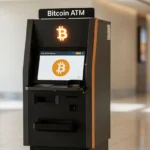
A bitcoin atm is a self service kiosk that lets you buy, and sometimes sell, Bitcoin using cash or a debit card. Instead of connecting to your bank account like a regular ATM, it connects to the blockchain and sends the coins straight to your wallet. Bitcoin ATMs have become one of the fastest and easiest ways to get into crypto without opening an exchange account, but they come with tradeoffs worth understanding before you use one.
There are now more than 38,000 bitcoin atm machines installed worldwide, with the United States home to the large majority of them. This guide walks through how a bitcoin atm actually works, what it costs to use one, how much you can buy or sell in a day, and the fastest way to locate a machine near you.
Key takeaways
- A bitcoin atm lets you buy or sell Bitcoin with cash, without a bank account or online exchange signup.
- Fees typically run between 6% and 20% of the transaction, far higher than online exchanges.
- Most machines are buy only, though two way machines that also let you sell are becoming more common.
- Daily limits usually fall between $500 and $25,000 depending on the operator and your level of verification.
- CoinATMRadar remains the most complete tool for finding a bitcoin atm near you.
What Is a Bitcoin ATM?
A bitcoin atm is a standalone kiosk, usually found in a gas station, convenience store or shopping center, that allows someone to exchange cash for Bitcoin or, on some machines, other cryptocurrencies. The machine is also known as a crypto atm or a BTM, short for Bitcoin Teller Machine. These names are used interchangeably across the industry.
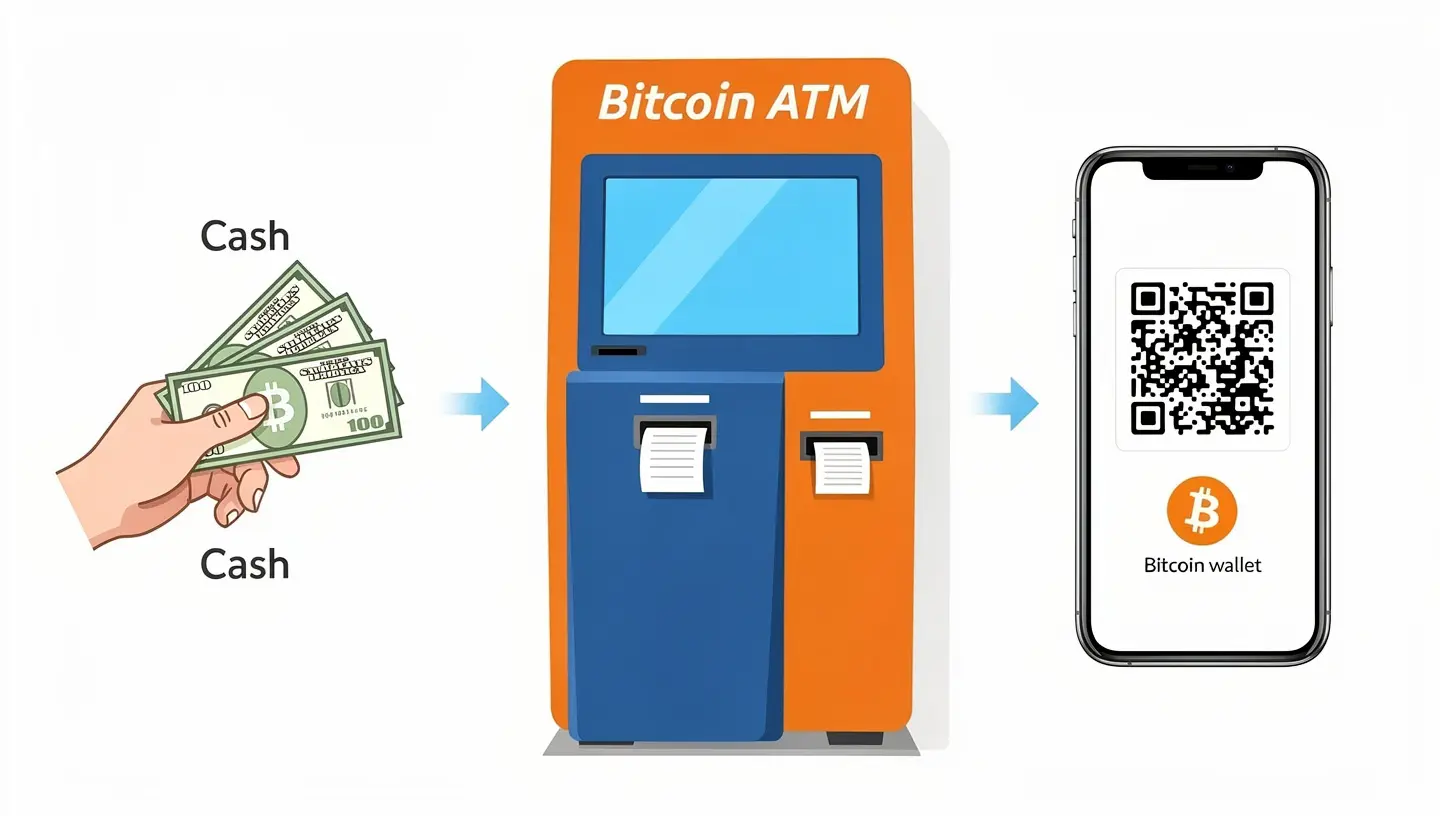
The core difference between a bitcoin atm and a traditional bank ATM is what sits behind it. A bank ATM pulls funds from your checking account. A bitcoin atm pulls funds from cash you physically insert, converts that amount into Bitcoin at the current market rate, and sends it to a wallet address you provide by scanning a QR code.
A Brief History
The first bitcoin atm opened on October 29, 2013, inside the Waves Coffee Shop in downtown Vancouver, Canada. It was a Robocoin machine, and while it only stayed in operation until 2015 because of technical issues, it is widely credited as the machine that started the entire category. From that single kiosk, the industry grew into tens of thousands of installations across dozens of countries.
How Many Bitcoin ATMs Are There Today?
As of 2025, there are more than 38,000 bitcoin atm machines operating around the world, and the United States hosts the majority of them. Growth has slowed compared to the boom years between 2020 and 2022, but new installations still happen every week, mostly through a handful of large operators that dominate the space.
How Does a Bitcoin ATM Work?
Using a bitcoin atm is fairly simple once you understand the sequence, though the exact steps vary slightly by operator and machine model.
Buying Bitcoin at an ATM
- Select the cryptocurrency you want to buy on the machine’s touchscreen
- Verify your identity, usually by entering a phone number and confirming a text message code
- Scan the QR code of your wallet so the machine knows where to send the coins
- Insert cash bill by bill until you reach the amount you want to spend
- Confirm the transaction and wait for the Bitcoin to arrive in your wallet, which usually takes a few minutes
Some machines also accept debit cards instead of cash, though this option is less common and often carries an extra fee. The screen usually shows a running total in both dollars and Bitcoin as you feed in bills, so you can see exactly how much crypto you are about to receive before you confirm anything. Once confirmed, the transaction broadcasts to the network right away, and you can track it moving toward your wallet using any blockchain explorer if you want to watch it in real time.
First time users sometimes worry about typing a wallet address wrong, which is why nearly every machine relies on scanning a QR code instead of manual entry. If you do not already have a wallet set up, most kiosks display a prompt offering to generate one on the spot, though setting one up beforehand at home is usually faster and gives you more control over your private keys.
Selling Bitcoin at an ATM
Selling works in reverse, and only on machines built to support it. You select the sell option, enter the amount of Bitcoin you want to cash out, and send it to the wallet address the machine displays. Once the transaction confirms on the blockchain, which can take anywhere from a few minutes to half an hour depending on network activity, the machine prints a redeemable voucher or dispenses cash directly. Selling tends to take longer than buying because the operator needs at least one network confirmation before releasing cash, which protects them against the transaction being reversed. Some locations require you to bring the printed voucher to a store clerk to collect your cash rather than dispensing it from the machine itself, so it helps to check the listing beforehand to know what to expect at that specific address.
One Way vs Two Way Bitcoin ATMs
Not every bitcoin atm does the same job. One way machines only let you buy Bitcoin with cash and make up the majority of installed machines in most markets, largely because they are simpler and cheaper to operate. Two way machines support both buying and selling, giving users the option to cash out Bitcoin for physical currency on the spot. Two way machines are less common but growing quickly as demand for cash out options increases. If cashing out matters to you, it is worth checking a machine’s listing on a locator app before making the trip, since not every kiosk near you will support selling.
The gap between the two types comes down to cost and complexity for the operator. A buy only kiosk is essentially a one directional cash counter with a screen, while a two way machine needs additional hardware to verify incoming Bitcoin, calculate a fair cash payout, and physically dispense bills securely. That extra hardware and liability is part of why two way locations are still the minority, even as more operators roll them out in bigger cities to meet demand from people who want a cash exit option without going through a bank transfer.
What Cryptocurrencies Can You Buy at a Bitcoin ATM?
Despite the name, most bitcoin atm machines are not limited to Bitcoin. Many also support Ethereum, Litecoin, Bitcoin Cash, Dogecoin and stablecoins like Tether, depending on the operator and the specific kiosk. Bitcoin remains the default and most requested option, which is why the machines kept the name even as their coin selection expanded.
Bitcoin ATM Fees Explained
Fees are the single biggest downside of using one of these machines, and they come from more than one place.
Transaction Fee vs Spread Fee
Operators charge a stated transaction fee, often listed as a flat percentage on the machine’s screen before you confirm. On top of that, most machines apply a spread, meaning they quote you a Bitcoin price slightly worse than the real market price. The spread is rarely advertised clearly and can add several extra percentage points to the real cost of the transaction.
Network Fees
Separate from the operator’s cut, there is a network fee paid to Bitcoin miners for processing the transaction on the blockchain. This usually adds an extra $1 to $10, though it can spike higher when the network is congested.
Average Bitcoin ATM Fees by Operator
| Operator | Typical fee range |
|---|---|
| CoinFlip | 7% to 15% |
| Bitcoin Depot | 10% to 20% |
| RockItCoin | 7% to 20% |
| ByteFederal | 8% to 15% |
| Industry average | 9% to 25% |
Bitcoin ATM Fees vs Online Exchange Fees
| Transaction type | Bitcoin atm fee | Online exchange fee |
|---|---|---|
| Buying Bitcoin | 6% to 20% | 0.1% to 1.5% |
| Selling Bitcoin | 5% to 15% | 0.1% to 1.5% |
| Network fee | $1 to $10 extra | Varies by network |
Example: What $100 Buys You After Fees
If you insert $100 into a bitcoin atm charging a combined 12% in fees and spread, roughly $88 worth of Bitcoin actually gets sent to your wallet after the network fee is subtracted. Compare that to a typical online exchange, where the same $100 might only lose $1 to $2 to fees. The convenience of walking up to a machine with cash comes at a real cost.
Why Are Bitcoin ATM Fees So High?
A few factors push bitcoin atm fees well above what online platforms charge.
- Cash handling and maintenance: Someone has to physically restock cash, service the hardware and secure each location.
- Regulatory compliance: Operators must follow anti money laundering and know your customer rules, which adds ongoing legal and reporting costs.
- Volatility risk: Operators hold Bitcoin briefly during each transaction and price in some cushion against sudden price swings.
- Convenience premium: You are paying for instant access with no account setup, and that speed is priced accordingly.
How to Minimize Bitcoin ATM Fees
A few habits can meaningfully cut what you pay. Compare fees across nearby machines before choosing one, since rates can vary widely even within the same city. Larger transactions often carry a lower percentage fee than small ones, so consolidating trips can help. Avoid using a machine during periods of high network congestion, when miner fees spike. Some operators also offer a rate match program if you find a cheaper competitor within a set radius, so it is worth asking or checking the app before you commit to a location.
Bitcoin ATM Daily Limits and Verification
Most machines require at least a phone number and a text message code for small purchases, often under $500 to $900. Larger transactions typically require scanning a government issued ID, and some machines ask for a selfie to match against the ID. Daily limits usually range from $500 to $25,000, though some operators offer verified accounts with limits as high as $15,000 to $50,000 once you complete a full identity check in advance. Setting up an account before visiting can save time and unlock higher limits on the spot.
Where to Find a Bitcoin ATM Near You
Using CoinATMRadar and Other Locator Tools
CoinATMRadar is the most widely used directory for finding a machine near you, showing live listings, fees and operator details for locations around the world. Most individual operators also run their own locator maps on their websites, which can be more accurate for real time availability at a specific address.
Major Bitcoin ATM Operators
A handful of companies operate most of the machines in the United States. Bitcoin Depot, CoinFlip and Athena Bitcoin together run more than 16,000 machines, with other operators like Coin Cloud, RockItCoin and ByteFederal filling in additional coverage across different regions.
Common Bitcoin ATM Locations
- Convenience stores and gas stations
- Shopping malls and retail centers
- Grocery stores
- Restaurants, bars and laundromats
- Hotels and travel centers
Where Are Most Bitcoin ATMs Located?
In the United States, Texas, California and Florida host the largest concentration of bitcoin atm machines. Rural areas tend to have far fewer options, so anyone outside a major metro area may need to plan a longer trip or rely on an online exchange instead.
Benefits and Drawbacks of Using a Bitcoin ATM
Advantages
- Speed: Transactions complete in minutes with no account approval wait time
- Accessibility: No bank account is required, which helps people who prefer cash or lack traditional banking access
- Privacy: Many machines require less personal information than a full exchange signup, especially for smaller amounts
- Ability to sell: Two way machines let you cash out Bitcoin directly, without waiting for a bank transfer from an exchange
Disadvantages
- High fees: Costs are far above what online exchanges charge
- Limited coin selection: Most machines focus on Bitcoin, with fewer options for altcoins compared to a full exchange
- Scam exposure: The cash and irreversible nature of crypto makes bitcoin atms a frequent target for fraud schemes
- No deposit protection: Funds sent to a wallet are not insured the way a bank account balance would be
Weighing these tradeoffs usually comes down to how much you value speed versus cost. Someone buying a small amount as a gift or trying crypto for the first time may find the extra fee worth avoiding the hassle of exchange signup and identity verification delays. Someone building a larger position over time is almost always better off using an exchange, where the same transaction would cost a fraction of what a machine charges.
Are Bitcoin ATMs Safe? Common Scams to Avoid
A bitcoin atm operated by a legitimate, licensed company is generally safe to use for buying or selling Bitcoin. The real risk usually comes from outside the machine itself, in the form of scammers who direct victims to a bitcoin atm as the final step of a fraud. According to the Federal Trade Commission, consumers reported losing more than $110 million to bitcoin atm related scams in 2023 alone, with losses continuing to climb into 2024.
These schemes typically start with an unexpected phone call, text or online message from someone posing as a government agency, a utility company or a romantic interest, pressuring the victim to withdraw cash and feed it into a nearby machine. A real government agency or business will never ask you to pay a bill or resolve a legal issue using a bitcoin atm. If you ever feel pressured to act quickly and send crypto to someone you have not met in person, treat that as a serious warning sign. Storing your seed phrase securely and never sharing it with anyone, including someone claiming to help you, is one of the simplest ways to protect yourself once you own Bitcoin.
It also helps to know who actually holds your funds after a transaction. Coins sent from a bitcoin atm to a wallet you control are yours outright, with no third party able to freeze or reverse the transfer. This is different from keeping funds on an exchange account, and understanding the difference between a custodial and non custodial wallet can help you decide where you want your Bitcoin to end up once it leaves the machine. Before visiting any location, a quick search for the operator’s name alongside complaints or reviews can also flag machines with a poor track record.
Bitcoin ATM vs Online Exchange: Which Should You Use?
A bitcoin atm makes the most sense when speed and cash access matter more than cost, such as buying a small amount quickly without setting up an account. An online exchange is the better choice for larger purchases, regular buying, or anyone who wants access to a wider range of coins at a fraction of the fee. Many people end up using both, a bitcoin atm for occasional cash transactions and an exchange for everything else.
There is also a practical middle ground worth mentioning. Someone without a bank account, or someone who simply prefers not to link financial accounts to a crypto platform, may find that a bitcoin atm is not just more convenient but genuinely the only realistic option available to them. In that case, the higher fee functions less like a premium and more like the cost of access itself.
Bottom Line
A bitcoin atm offers one of the fastest ways to turn cash into Bitcoin without a bank account or online signup, and a growing number of machines now let you sell just as easily. That convenience comes at a real cost in fees, so it pays to compare nearby machines, understand your daily limit before you go, and stay alert to scam tactics that abuse the cash and speed a bitcoin atm provides. Used carefully, it remains one of the simplest entry points into owning crypto.
Frequently Asked Questions
How much do bitcoin atms charge?
Most bitcoin atm machines charge between 6% and 20% of the transaction amount, combining a stated fee with a spread on the exchange rate, plus a small network fee of $1 to $10.
Do bitcoin atms require ID?
Small purchases often only need a phone number and text verification code. Larger transactions usually require scanning a government issued ID, and some machines request a selfie for additional verification.
Can I sell Bitcoin at a bitcoin atm?
Yes, but only on two way machines built to support selling. You send Bitcoin to the address the machine provides and collect cash once the transaction confirms on the blockchain.
What’s the maximum I can buy at a bitcoin atm?
Daily limits typically range from $500 to $25,000 depending on the operator and your verification level, though some operators allow higher limits for fully verified accounts.
Are bitcoin atm transactions taxable?
Buying or selling Bitcoin at an atm is generally treated the same as any other crypto transaction for tax purposes in most countries. It is worth speaking with a tax professional about how a purchase or sale should be reported where you live.
How is a bitcoin atm different from a regular ATM?
A regular ATM connects to your bank account and dispenses cash. A bitcoin atm connects to the blockchain, converts cash you insert into Bitcoin, and sends it to a digital wallet instead.
What do I need to use a bitcoin atm?
You need cash, a phone number for verification, and a crypto wallet with a QR code ready to scan. Larger transactions may also require a government issued ID.
What cryptocurrencies can I buy at a bitcoin atm?
Bitcoin is the default option at nearly every machine, but many kiosks also support Ethereum, Litecoin, Bitcoin Cash, Dogecoin and stablecoins like Tether, depending on the operator.
How many bitcoin atms are there in the world?
There are more than 38,000 bitcoin atm machines installed worldwide as of 2025, with the United States home to the majority of them.
Are bitcoin atm fees negotiable or refundable?
Fees are generally fixed and shown before you confirm the transaction, so they are not negotiable in the moment. Some operators offer a rate match against nearby competitors if you ask before starting the transaction, but fees are not refundable once a transaction is confirmed.