Bitcoin (BTC) is a digital currency that runs on a decentralized network, meaning no bank, government, or company controls it. It was introduced in 2008 by a person, or group of people, using the name Satoshi Nakamoto, and the network went live in January 2009. Since then, Bitcoin has grown from a niche experiment into the most traded cryptocurrency in the world, with a total supply that will never exceed 21 million coins.
This guide covers how Bitcoin works, who created it, how transactions get processed, and how to buy and store it safely.
What is Bitcoin?
Bitcoin is digital money. You can send it to anyone in the world without going through a bank, and transactions are recorded on a public ledger called the blockchain. No single person or institution owns or manages the network. Instead, thousands of computers around the world, called nodes, maintain it together.
Unlike a dollar bill or a euro, Bitcoin does not exist in physical form. It exists only as entries on a shared database. But like physical money, you can use it to pay for goods and services, send it to other people, or hold it as an investment. The key difference is that no government can print more of it, and no central bank sets its interest rate. The rules are written into the software and enforced by the network itself.
Bitcoin vs traditional money
A central bank can, at any time, increase the money supply by creating new currency. Governments have done this throughout history, and the result is usually inflation, where each unit of currency buys a little less than it did before. Bitcoin has no central bank. Its supply schedule is fixed in the code: new coins are released on a predictable schedule, and the total will never exceed 21 million. This built-in scarcity is one reason many people refer to Bitcoin as “digital gold”. Gold is scarce because there is a limited amount in the earth. Bitcoin is scarce because the software says so, and no one has the authority to change that rule unilaterally.
| Feature | Bitcoin | Traditional currency |
|---|---|---|
| Supply | Capped at 21 million | Unlimited, set by central banks |
| Control | Decentralized network | Central banks and governments |
| Transactions | Peer-to-peer, borderless | Through banks and intermediaries |
| Transparency | Public blockchain, anyone can verify | Controlled by institutions |
| Divisibility | Down to 0.00000001 BTC (1 satoshi) | Down to cents |
What does BTC stand for?
BTC is the ticker symbol for Bitcoin, the same way USD stands for the US dollar or EUR stands for the euro. You will see BTC used on exchanges, price trackers, and wallets. The two terms, Bitcoin and BTC, refer to the same thing. For more on how BTC fits into the broader crypto landscape, that guide covers the distinction in full.
Who created Bitcoin?
Bitcoin was created by Satoshi Nakamoto, a name that has never been tied to a confirmed real identity. On October 31, 2008, Nakamoto published a nine-page document titled “Bitcoin: A Peer-to-Peer Electronic Cash System” on a cryptography mailing list. That document, now known as the Bitcoin whitepaper, laid out the technical blueprint for the network. On January 3, 2009, Nakamoto mined the first block, called the Genesis Block, and Bitcoin went live.
Nakamoto communicated with early developers through emails and forum posts until 2011, then went silent. Their true identity has never been confirmed. The network, however, continued to grow without them. Today it is maintained by thousands of independent developers, miners, and node operators across the world.
The history before Bitcoin
Bitcoin did not appear out of nowhere. Nakamoto drew on decades of work in cryptography and digital money. Several earlier attempts shaped the ideas that ended up in the whitepaper:
- eCash (1983) by David Chaum was the first serious attempt at anonymous digital payments
- Hashcash (1997) by Adam Back introduced proof-of-work, a system for making computational tasks costly to prevent spam
- B-money (1998) by Wei Dai proposed a decentralized digital cash system
- Bit Gold (1998-2005) by Nick Szabo came closest to Bitcoin in design, proposing a scarce digital commodity secured by proof-of-work
- Reusable proof of work (2004) by Hal Finney built on Hashcash and later became the basis for Bitcoin’s mining mechanism
None of these projects solved the double-spend problem, meaning the risk that someone could spend the same digital coin twice. Bitcoin’s blockchain was the first system to solve this without a central authority.
Bitcoin Pizza Day and the first real transaction
In the first year of Bitcoin’s existence, it had no established price. On May 22, 2010, a programmer named Laszlo Hanyecz paid 10,000 BTC for two pizzas. At the time, that amount was worth roughly $41. The date is now celebrated in the Bitcoin community as Bitcoin Pizza Day. At Bitcoin’s peak price in October 2025, those 10,000 BTC were worth over one billion dollars.
How does Bitcoin work?
Every time someone sends Bitcoin, the transaction is broadcast to the entire network. Nodes, the computers running Bitcoin software, check that the sender actually owns the coins and has not already spent them. Once enough nodes confirm the transaction is valid, it gets bundled with other recent transactions into a block. That block is then added to the chain of all previous blocks.
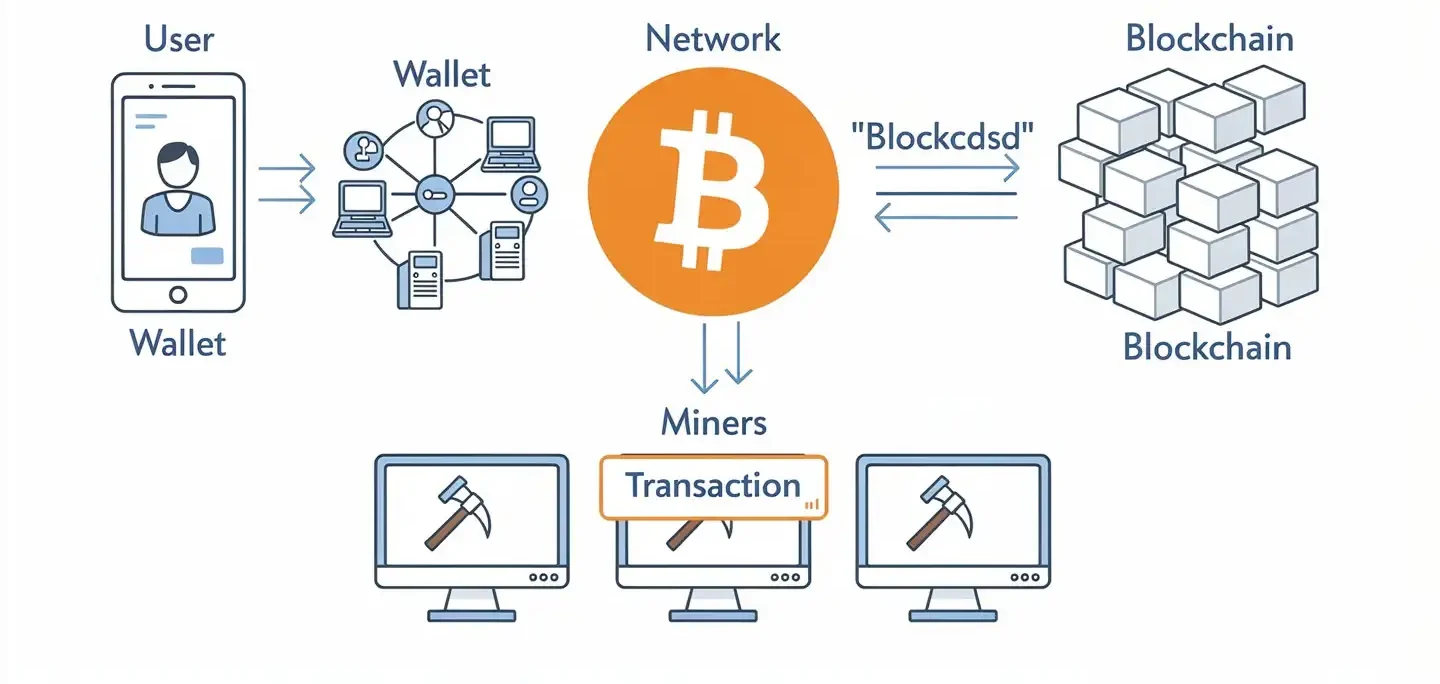
This is the blockchain. For a fuller explanation of the underlying technology, the guide on how crypto works goes into more depth on peer-to-peer networks and distributed ledgers.
What is the Bitcoin blockchain?
The blockchain is a public record of every Bitcoin transaction ever made. Think of it as a spreadsheet that thousands of computers around the world hold a copy of simultaneously. Each new page in that spreadsheet is a block. Each block contains a list of transactions and a cryptographic fingerprint of the block before it. That link is what makes the chain: if someone tried to go back and change an old transaction, every block that came after it would break, and the network would reject the change instantly.
This structure makes Bitcoin transactions effectively permanent and tamper-resistant. No one can secretly change the history. Anyone with an internet connection can look up any transaction on a blockchain explorer and verify it themselves.
Public keys and private keys
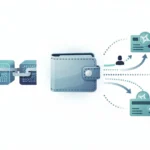
Every Bitcoin wallet has two keys. The public key generates your wallet address, the string of letters and numbers you give people when you want to receive Bitcoin. The private key is a secret code that proves you own the coins at that address and authorizes you to send them. It works a bit like a password, but one that cannot be reset if lost.
If someone gets your private key, they can take your Bitcoin. If you lose it, your coins are gone. This is why seed phrase storage is so important, as the seed phrase is what lets you recover your private key.
How are Bitcoin transactions verified?
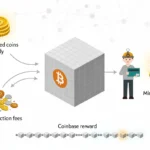
When you send Bitcoin, your transaction joins a waiting area called the mempool. Miners pick transactions from the mempool, bundle them into a block, and then compete to add that block to the blockchain. To add a block, a miner must solve a computational puzzle. The first miner to solve it broadcasts the answer to the network. Other nodes verify the solution in seconds, and if it checks out, the block is added and the miner collects a reward. This process repeats roughly every 10 minutes and is what keeps the network running without a central authority.
What is Bitcoin mining?
Bitcoin mining is the process by which new transactions get confirmed and new coins enter circulation. Miners are computers, now mostly specialized machines called ASICs, that run the same calculation billions of times per second in a race to solve the network’s puzzle. The puzzle is hard enough that no single miner can dominate it.
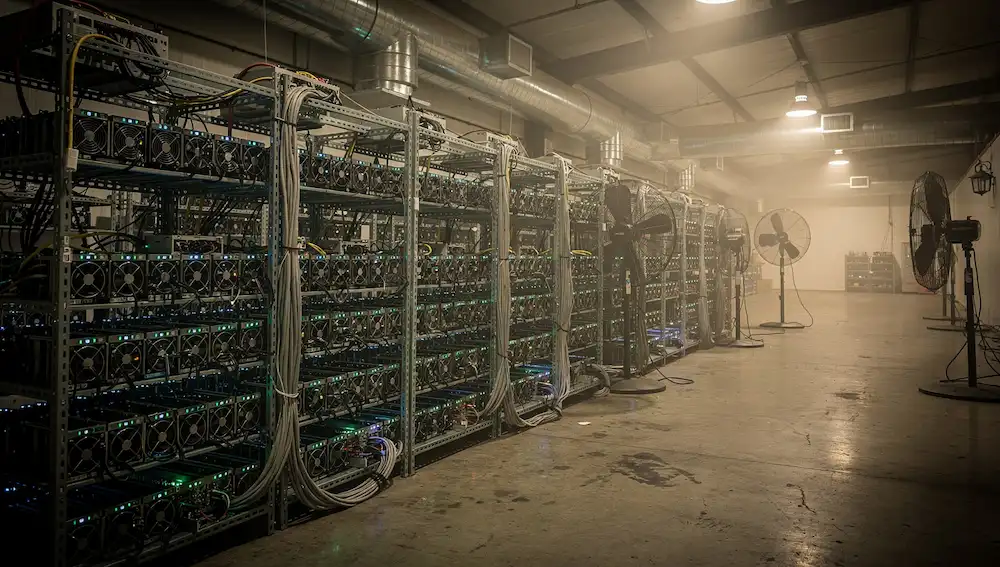
The more computing power you throw at it, the more chances you have of winning, but the network adjusts the difficulty every two weeks to keep the average solving time at roughly 10 minutes, regardless of how many miners are competing.
How are new bitcoins created?
Every time a miner successfully adds a block, the network rewards them with newly created Bitcoin. This is called the block reward. When Bitcoin launched in 2009, the block reward was 50 BTC per block. The current block reward is 3.125 BTC, following the most recent halving in April 2024. This is the only way new Bitcoin enters circulation. There is no central bank issuing coins. Miners earn them by doing work that secures the network.
What is the Bitcoin halving?
Every 210,000 blocks, roughly every four years, the block reward is cut in half. This event is called the Bitcoin halving. It is written into the Bitcoin protocol and cannot be changed. The halving slows the rate at which new coins enter circulation. Combined with the 21 million cap, it creates a supply schedule that is known decades in advance. For the full record of every halving and what happened to the price afterward, the Bitcoin halving dates history covers each cycle in detail.
How many bitcoins are there?
By the end of 2025, more than 19.9 million Bitcoin had already been mined. That means over 95% of all Bitcoin that will ever exist is already in circulation. The remaining coins will be released gradually through mining rewards until around the year 2140, when the last fraction of a Bitcoin is mined and the total reaches exactly 21 million.
It is worth noting that a significant number of those 19.9 million coins are lost permanently, locked in wallets whose owners lost access to the private key. Some estimates put lost coins at over 3 million BTC. These coins cannot be recovered and will never re-enter circulation, making the effective supply even tighter than the 21 million figure suggests.
What gives Bitcoin its value?
Bitcoin’s value comes from several overlapping factors. Scarcity is the most obvious: there will only ever be 21 million, and demand has grown steadily over 15 years. Decentralization means no single party can manipulate it or shut it down, which makes it attractive to people who do not trust banks or governments. Liquidity matters too: Bitcoin trades on hundreds of exchanges around the world, 24 hours a day, seven days a week, with enough volume that large orders can be filled without dramatically moving the price.
In 2026, institutional adoption has added a new layer. Publicly traded companies hold Bitcoin on their balance sheets. Regulated spot Bitcoin ETFs trade on major US stock exchanges. Pension funds in several countries now have small allocations to it. None of this changes what Bitcoin is technically, but it does broaden the base of demand and provide market validation that did not exist five years ago.
Bitcoin is often compared to “digital gold” because both are scarce, portable, and not issued by a government. Gold has been a store of value for thousands of years because people collectively decided it was. Bitcoin’s case is the same: it has value because a growing number of people around the world treat it as valuable, and because the underlying scarcity is mathematically guaranteed rather than dependent on anyone’s promise.
How to buy Bitcoin
Most people buy Bitcoin through a cryptocurrency exchange. You create an account, verify your identity with a government ID, deposit money from your bank account, and purchase Bitcoin at the current market price. Reputable exchanges include Coinbase, Kraken, and Binance. Once you buy, the exchange holds your Bitcoin in a custodial wallet on your behalf.
You do not need to buy a whole Bitcoin. Every Bitcoin is divisible into 100 million smaller units called satoshis. At a price of $70,000 per coin, you can buy $100 worth and receive roughly 142,857 satoshis. For a step-by-step walkthrough of the process including a comparison of exchanges, fees, and payment methods, the full guide on how to buy crypto covers everything from account setup to completing your first purchase.
How to store Bitcoin
When you buy Bitcoin on an exchange, the exchange holds the private key on your behalf. This is convenient but it means you are trusting the exchange not to get hacked and not to go bankrupt. The phrase often used in Bitcoin circles is “not your keys, not your coins.” If you want full control over your Bitcoin, you need to move it to a wallet where you hold the private key yourself.
Hot wallets vs cold wallets
A hot wallet is connected to the internet. It is usually a software app on your phone or computer. Hot wallets are convenient for regular transactions but carry more risk because anything connected to the internet can potentially be accessed remotely. For more on what a hot wallet is and the risks it carries, that guide breaks it down clearly.
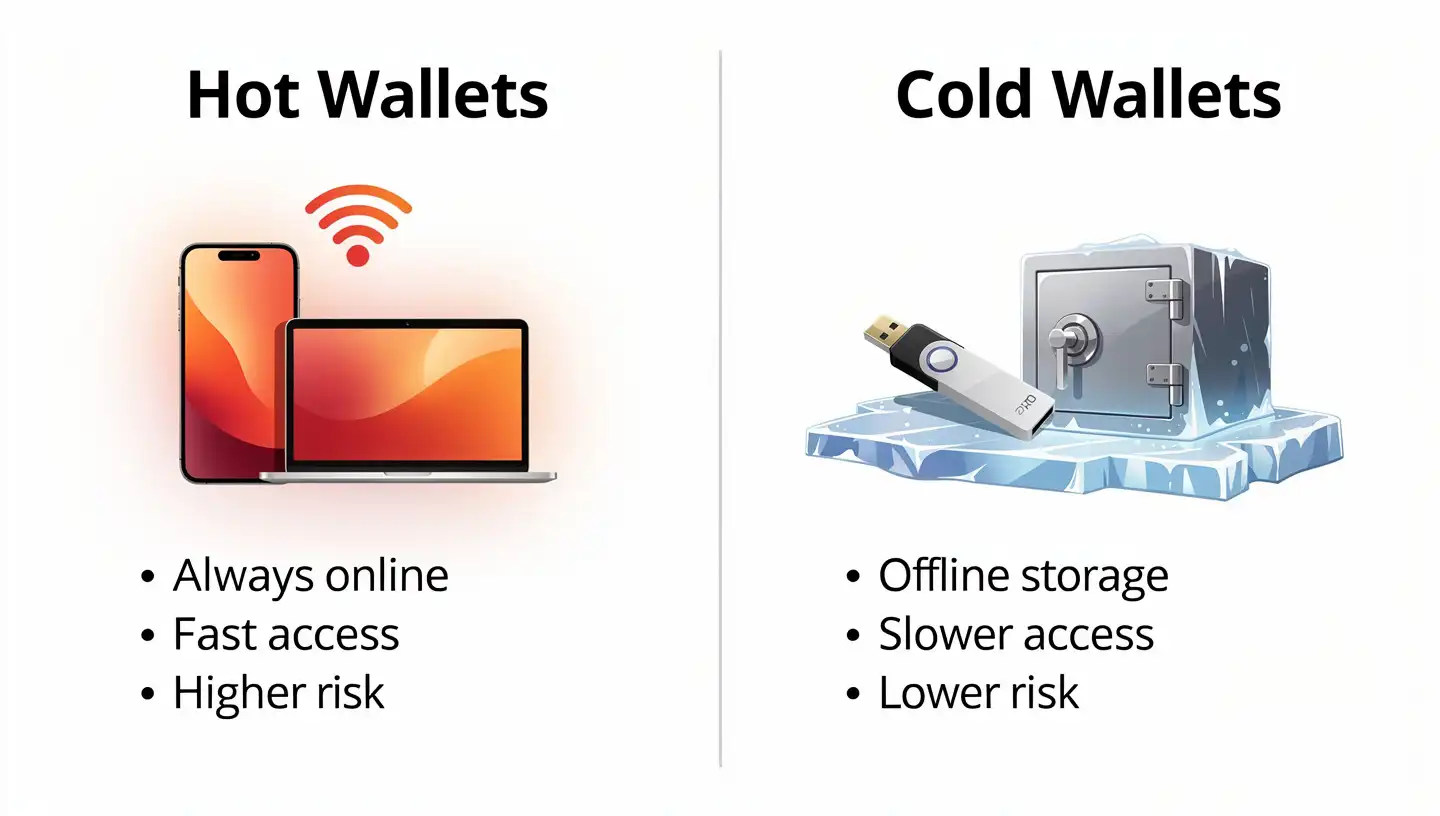
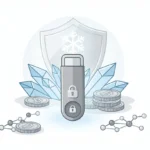
A cold wallet, or hardware wallet, stores your private key on a physical device that is never connected to the internet unless you are actively signing a transaction. Ledger and Trezor are the two most widely used hardware wallet brands. Cold wallets are the safest option for anyone holding a significant amount of Bitcoin. The guide on what a cold wallet is explains the mechanics in plain terms, and if you already use an exchange like Coinbase, the walkthrough on how to move crypto from Coinbase to a cold wallet covers the exact steps.
Whichever type of wallet you use, your security depends on protecting your seed phrase, the 12 or 24 words that can regenerate your private key if your device is lost or broken. For guidance on the safest ways to store it, the article on seed phrase storage is worth reading before you move any significant amount off an exchange.
What can you do with Bitcoin?
Bitcoin started as a payment system. You can still use it that way: a growing number of businesses accept BTC directly, and payment processors like BitPay allow merchants to accept Bitcoin and receive local currency in return. Some platforms allow you to spend Bitcoin with a debit card that converts it to local currency at the point of sale.
The more common use case in 2026 is as an investment or savings vehicle. Many people buy Bitcoin and hold it for years, treating it the way previous generations treated gold. Institutional investors use it as a hedge against currency devaluation. Some companies hold it as a treasury reserve asset. Bitcoin also underpins a range of financial products: spot ETFs, futures contracts, and options all use BTC as the underlying asset.
What Bitcoin is not well suited for is small, everyday transactions. Fees on the main Bitcoin network fluctuate with demand and can sometimes be several dollars per transaction. Layer 2 solutions like the Lightning Network address this, but adoption is still limited compared to the main chain.
Is Bitcoin a good investment?
Bitcoin has been the best-performing asset of the past decade by a significant margin. An investor who bought $100 of Bitcoin every week starting in January 2020 and held through March 2026 would have invested roughly $31,400 and seen that portfolio grow to approximately $95,000 to $105,000, a 200 to 230 percent return, despite buying through two major crashes.
That does not mean it is without risk. Bitcoin dropped from an all-time high of around $126,000 in October 2025 to roughly $62,000 in February 2026, a decline of over 50% in four months. That kind of volatility is normal in Bitcoin’s history, but it means you need to be prepared for the possibility that the price of your holdings could be cut in half before it recovers.
Most financial advisors who include Bitcoin in portfolio recommendations suggest limiting exposure to between 1% and 5% of total assets, treating it as a high-risk, high-potential component alongside more stable holdings. Never invest more than you can afford to lose entirely.
Bitcoin pros and cons
- No government or central bank can inflate away its value
- Borderless transactions without bank approval or intermediaries
- Portable and divisible in ways physical gold is not
- 15+ years of network uptime with no successful attacks on the base protocol
- Regulated investment products like ETFs now available in the US
- High volatility: 50-80% drawdowns have occurred multiple times
- No consumer protection: if you send Bitcoin to the wrong address or lose your key, it is gone
- Regulatory uncertainty in some countries
- Slow on-chain transactions for everyday small payments
- Energy consumption: mining requires substantial electricity
Is Bitcoin legal?
Bitcoin is legal to buy, hold, and use in most countries, including the United States, the United Kingdom, the European Union, Canada, and Australia. In the US, it is treated as property for tax purposes, meaning capital gains tax applies when you sell it at a profit. In Germany, Bitcoin held for more than one year is exempt from capital gains tax. In the UK, gains above the annual allowance are subject to capital gains tax.
A small number of countries have restricted or banned Bitcoin, including China, which banned crypto trading and mining in 2021. If you are unsure about the rules in your country, a tax professional familiar with digital assets is the right person to ask.
Bitcoin glossary
These are the core terms you will come across when reading about Bitcoin:
- Block: a batch of transactions added to the blockchain at one time, roughly every 10 minutes
- Blockchain: the full, publicly verifiable record of every Bitcoin transaction since January 2009
- Node: a computer running Bitcoin software that stores a copy of the blockchain and validates transactions
- Miner: a node that competes to add new blocks and earns the block reward for doing so
- Hash: a fixed-length string of characters generated from transaction data; miners compete to find a hash that meets the network’s criteria
- Proof of work: the competitive computation process miners use to earn the right to add a block
- Private key: a secret code that proves you own your Bitcoin and authorizes transactions
- Public key: generates your wallet address; what you share with people who want to send you Bitcoin
- Seed phrase: 12 or 24 words that back up your private key and let you recover your wallet
- Halving: the event every four years where the block reward is cut in half
- Satoshi: the smallest unit of Bitcoin; 1 BTC equals 100,000,000 satoshis
- Genesis Block: the first block ever mined, on January 3, 2009, by Satoshi Nakamoto
Frequently asked questions about Bitcoin
What does BTC stand for?
BTC is the ticker symbol for Bitcoin. It works the same way USD stands for the US dollar. On exchanges, price trackers, and wallets, Bitcoin is listed as BTC. The two terms mean exactly the same thing.
Is Bitcoin the same as crypto?
No. Bitcoin is one cryptocurrency, the first and largest by market value. Crypto is the broader category that includes thousands of other digital currencies and tokens. The full breakdown of how they relate is covered in the guide on the difference between crypto and Bitcoin.
How many bitcoin are there?
As of early 2026, more than 19.9 million Bitcoin have been mined. The total supply is capped at 21 million and will never exceed that number. The last Bitcoin is estimated to be mined around 2140.
What is a satoshi?
A satoshi is the smallest unit of Bitcoin. One Bitcoin equals 100,000,000 satoshis. The unit is named after Satoshi Nakamoto. When Bitcoin’s price is high, people often buy and hold in satoshis rather than whole coins.
Can Bitcoin be hacked?
The Bitcoin network itself has never been successfully hacked in over 15 years of operation. Hacks in crypto almost always target exchanges or individual wallets, not the underlying protocol. Keeping your private key secure and using a hardware wallet for large amounts are the two most effective precautions you can take.
Is Bitcoin anonymous?
Bitcoin is pseudonymous, not anonymous. Every transaction is public on the blockchain and permanently visible. What is not immediately visible is the real-world identity behind a wallet address. However, when you buy Bitcoin on a regulated exchange and verify your identity, your address can be linked to you. Complete anonymity requires additional steps that most users do not take.
How long does a Bitcoin transaction take?
A Bitcoin transaction typically receives its first confirmation within 10 minutes, since that is how long it takes to mine a new block. Most exchanges and merchants require between 1 and 6 confirmations before treating the payment as final, which means anywhere from 10 minutes to one hour in practice. Transaction fees affect priority: higher fees mean miners are more likely to include your transaction in the next block.
What happens when all 21 million bitcoin are mined?
When the last Bitcoin is mined around 2140, miners will no longer earn block rewards from new coins. At that point, their compensation will come entirely from transaction fees paid by users. Whether fees alone will be sufficient to keep miners securing the network is one of the open questions about Bitcoin’s long-term future.
What is the difference between Bitcoin and Ethereum?
Bitcoin was designed primarily as a decentralized currency and store of value. Ethereum was designed as a programmable platform where developers can build applications, known as smart contracts. Bitcoin has a fixed supply of 21 million; Ethereum has no hard cap. Both are the two largest cryptocurrencies by market value, but they serve different primary purposes.
Does MetaMask support Bitcoin?
MetaMask does not natively support Bitcoin. It is built for Ethereum and Ethereum-compatible networks. To hold and send Bitcoin, you need a wallet designed for it, such as Ledger, Trezor, or a software wallet like Electrum. The full breakdown is covered in the guide on whether MetaMask supports Bitcoin.
What is Bitcoin dominance?
Bitcoin dominance is the percentage of the total crypto market capitalization that Bitcoin accounts for. When Bitcoin dominance is high, it means Bitcoin is holding or gaining value relative to other cryptocurrencies. When it drops, capital is typically moving into altcoins. It is a widely used metric among traders and analysts. Current figures and an explanation of how to read the chart are in the guide on Bitcoin dominance (BTC.D).