The Bitcoin halving is a programmed reduction in the reward paid to miners for adding a new block to the blockchain. It happens every 210,000 blocks and cuts the reward in half each time. Since Bitcoin launched in January 2009, four halvings have taken place. Each one has permanently reduced the rate at which new coins enter circulation, steadily pushing Bitcoin toward its hard cap of 21 million coins. This guide covers every halving from the first in 2012 through the fourth in April 2024, the price performance that followed each one, and what the data tells us about the cycle ahead.
- The Bitcoin halving occurs every 210,000 blocks, approximately every four years
- The block reward started at 50 BTC in 2009 and currently sits at 3.125 BTC per block
- Four halvings have taken place: November 2012, July 2016, May 2020, and April 2024
- The fifth halving is estimated for around March or April 2028 at block 1,050,000
- Each of the first three complete cycles was followed by a significant rise in the Bitcoin price
- In total there will be 32 halvings, with the last fraction of Bitcoin mined around the year 2140
What is the Bitcoin halving?
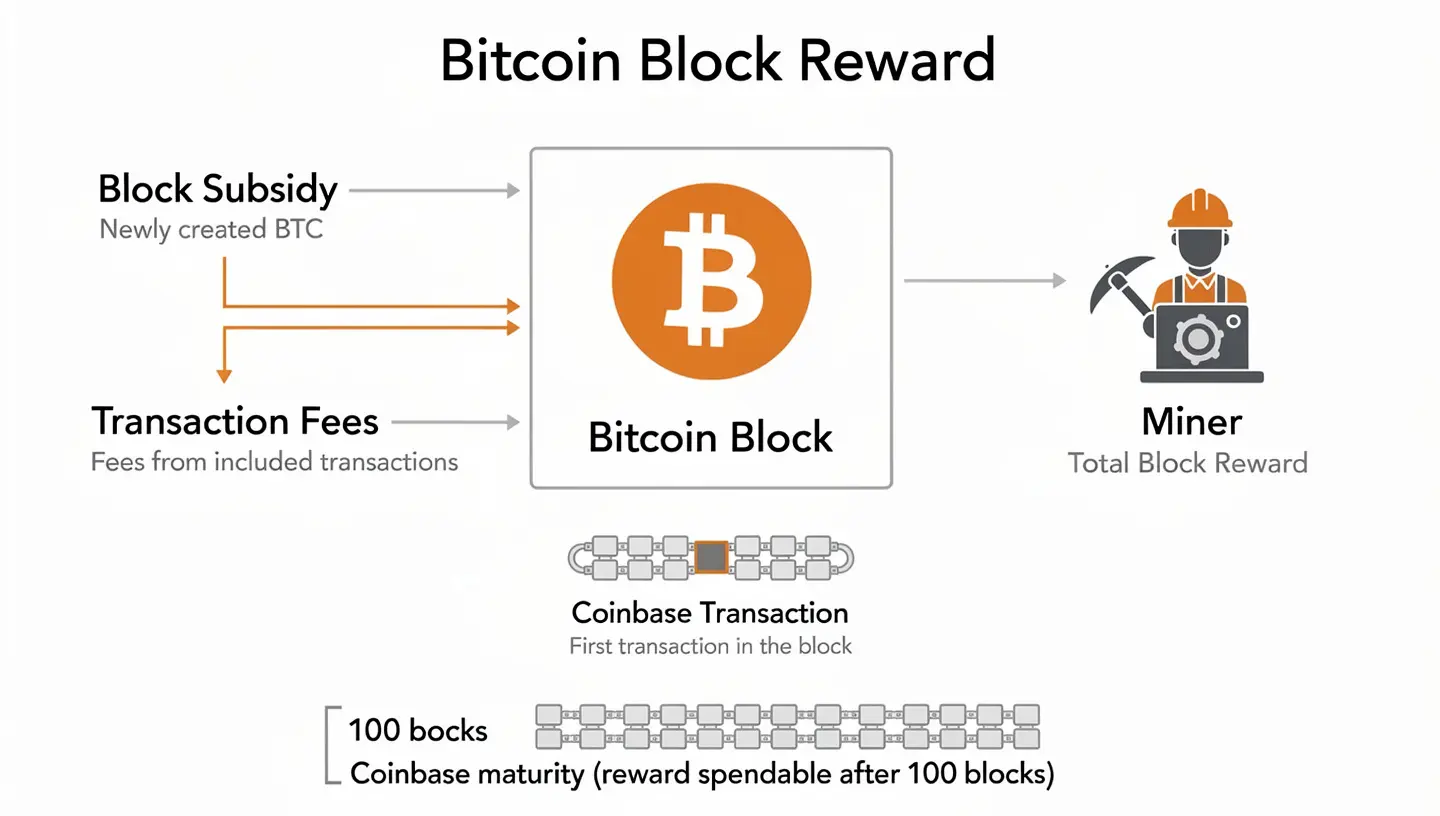
The Bitcoin halving is a built-in event that reduces the block reward paid to miners by 50 percent. When a miner successfully adds a block of transactions to the Bitcoin blockchain, the network rewards them with a fixed number of newly created Bitcoin. That reward is the only way new BTC enters circulation. Satoshi Nakamoto designed the halving so that as demand for Bitcoin grew, the rate of new supply would fall, creating a predictable scarcity model. The halving continues until the block reward reaches zero around the year 2140, at which point miners will be compensated solely by transaction fees.
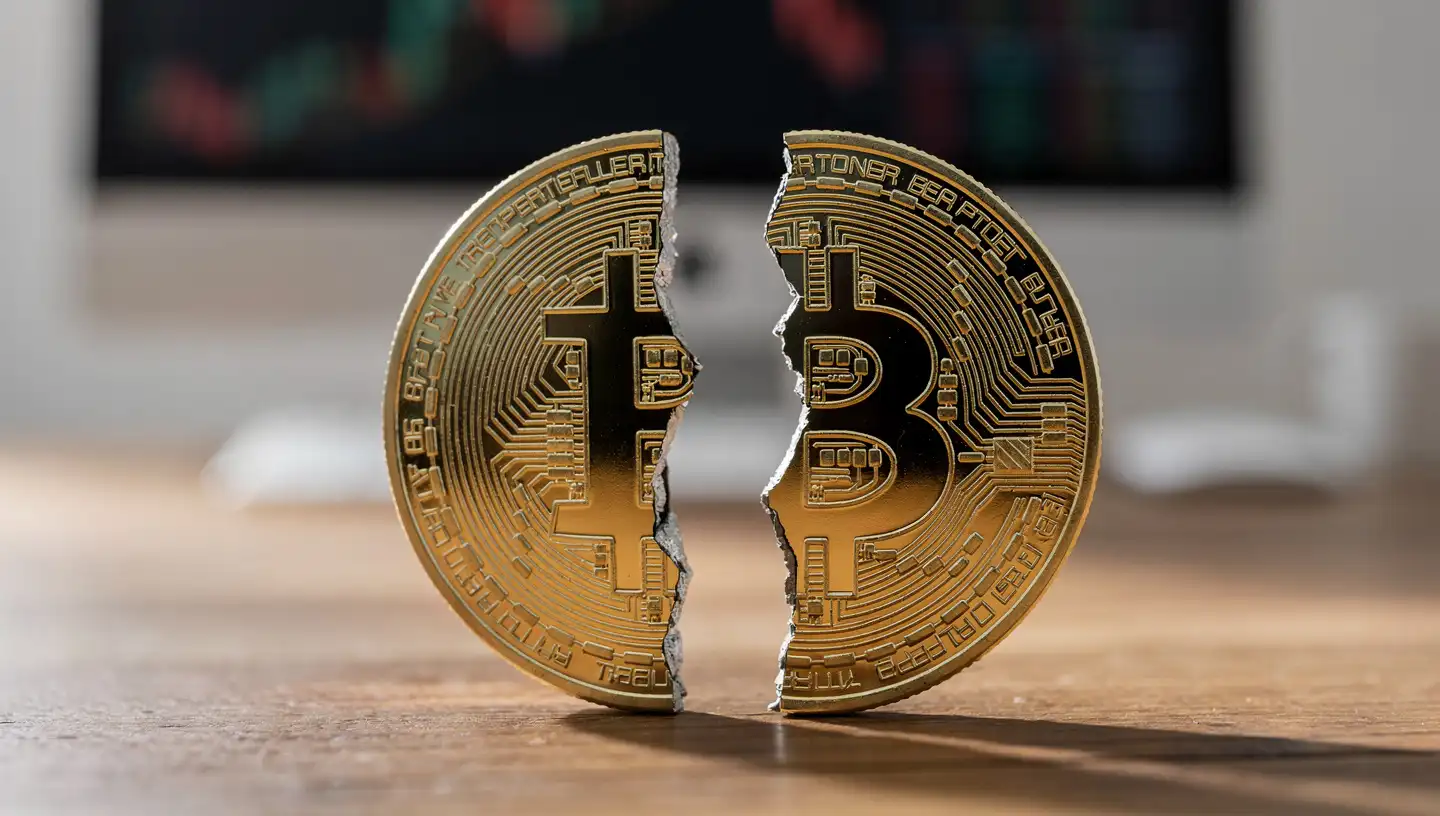
The halving is not tied to a calendar date. It triggers automatically when the network mines its 210,000th block in the current cycle. Because the Bitcoin protocol targets a new block every ten minutes on average, this works out to roughly four years between halvings, though the actual gap varies slightly depending on how quickly miners are solving blocks at the time.
Why does the halving exist?
Satoshi Nakamoto built the halving into Bitcoin’s code as a mechanism to control inflation. Traditional currencies are issued by central banks that can increase the money supply at any time. Bitcoin has no central bank. Its supply schedule is written into the protocol and enforced by every node on the network.
With a fixed supply cap of 21 million coins, Bitcoin was designed to behave more like a scarce commodity than a currency that can be printed without limit. The comparison to gold is common: both are scarce, both require effort to extract, and both have a supply that is difficult to manipulate. The difference is that Bitcoin’s scarcity is mathematically guaranteed rather than dependent on geological limits.
How the difficulty adjustment keeps blocks on schedule
The Bitcoin network adjusts its mining difficulty every 2,016 blocks, which is roughly every two weeks. If miners are solving blocks faster than the ten-minute target, the difficulty rises. If they are solving them slower, it falls. This self-correcting mechanism is why halvings happen approximately every four years rather than on a fixed calendar date. When hash rate surged in 2021, blocks came in slightly faster than ten minutes for extended periods, which would have accelerated the cycle.
The difficulty adjustment pulled it back toward the target. Understanding how the blockchain and mining work is useful context for understanding why the halving schedule is reliable but not perfectly predictable.
Bitcoin halving dates: complete history at a glance
The table below shows every Bitcoin halving that has taken place and the estimated date for the fifth.
| Halving | Date | Block height | Block reward | BTC price on halving day |
|---|---|---|---|---|
| First | November 28, 2012 | 210,000 | 50 BTC → 25 BTC | $12.40 |
| Second | July 9, 2016 | 420,000 | 25 BTC → 12.5 BTC | $680 |
| Third | May 11, 2020 | 630,000 | 12.5 BTC → 6.25 BTC | $8,590 |
| Fourth | April 20, 2024 | 840,000 | 6.25 BTC → 3.125 BTC | $64,025 |
| Fifth (estimated) | ~March or April 2028 | 1,050,000 | 3.125 BTC → 1.5625 BTC | — |
Each halving has occurred at a significantly higher Bitcoin price than the one before it. The price on the day of the fourth halving in April 2024 was more than 5,000 times the price on the day of the first halving in November 2012.
The pre-halving period (2009 to 2012)
Bitcoin launched on January 3, 2009, when Satoshi Nakamoto mined the Genesis Block and collected the first block reward of 50 BTC. In the early days the network had almost no monetary value. The first documented commercial transaction using Bitcoin took place on May 22, 2010, when programmer Laszlo Hanyecz paid 10,000 BTC for two pizzas, a date the Bitcoin community now marks as Bitcoin Pizza Day.
During the pre-halving period, all 10.5 million Bitcoin from the first 210,000 blocks were mined. The price fluctuated between $0.06 and a brief peak of $29.60 in June 2011 before falling back. Satoshi Nakamoto participated in mining during this period and is estimated to have accumulated somewhere between 750,000 and 1.1 million BTC before going silent in 2011. By the time the first halving arrived in November 2012, the Bitcoin price had settled around $12.40. For a full introduction to what Bitcoin is and how it works, that guide covers the basics from the ground up.
First halving: November 28, 2012
The first Bitcoin halving occurred on November 28, 2012, at block 210,000. The block reward dropped from 50 BTC to 25 BTC. On the day of the halving, Bitcoin traded at approximately $12.40. The event passed with relatively little attention from the broader public, partly because Bitcoin was still largely unknown outside of online communities and its primary association was with the Silk Road dark web marketplace.
The months following the halving brought significant turbulence. The collapse of the Mt. Gox exchange in early 2014 was the largest story of the cycle, wiping out hundreds of thousands of Bitcoin and shaking confidence in the market. Despite that, the price had already made its major move well before the collapse.
Price performance after the first halving
Approximately 367 days after the first halving, Bitcoin reached a cycle peak of $1,170 in November 2013, a gain of roughly +9,335% from the halving day price. A bear market followed, lasting around 410 days and bottoming in January 2015 at approximately $170. The cycle was marked by the collapse of Mt. Gox, which at its peak handled over 70 percent of all Bitcoin transactions. Even with that collapse, the first halving cycle demonstrated that reducing the rate of new supply could, under conditions of growing demand, produce substantial price appreciation.
Second halving: July 9, 2016
The second Bitcoin halving took place on July 9, 2016, at block 420,000. The block reward fell from 25 BTC to 12.5 BTC. Bitcoin traded at around $680 on the day of the halving. By 2016 the landscape had changed considerably. Bitcoin was facing real competition in the form of Ethereum, which launched in 2015 and introduced smart contracts and the ability to build decentralized applications on a blockchain. The ICO boom that followed added thousands of new tokens to the market and brought a wave of new retail participants. For context on how Bitcoin differs from the broader category of cryptocurrency, the guide on the difference between Bitcoin and crypto covers that directly.
Bitcoin dominance fell sharply during this cycle as money flowed into altcoins and ICOs, but BTC holders still had the opportunity for substantial gains as the cycle progressed.
Price performance after the second halving
Approximately 526 days after the second halving, Bitcoin reached a cycle peak of $19,400 in December 2017, a gain of roughly +2,753% from the halving day price. A bear market followed, with Bitcoin dropping around 84 percent from that peak and bottoming near $3,200 in December 2018. The 2017 bull run was the event that brought Bitcoin into mainstream financial media for the first time and introduced millions of people to the concept of cryptocurrency. The gains were smaller in percentage terms than the first cycle, which is consistent with a larger base market cap making outsized moves harder to sustain.
Third halving: May 11, 2020
The third Bitcoin halving occurred on May 11, 2020, at block 630,000. The block reward dropped from 12.5 BTC to 6.25 BTC. Bitcoin traded at around $8,590 on the day of the halving. The timing was unusual: the halving happened in the middle of the COVID-19 pandemic, just weeks after global markets had crashed sharply. Central banks around the world responded by dramatically expanding their money supplies. That context added weight to the narrative of Bitcoin as a hedge against currency debasement. For an explanation of what cryptocurrency is and how it differs from government money, that guide covers the fundamentals.
The third cycle was also marked by the entry of large institutional investors into Bitcoin for the first time. MicroStrategy, Tesla, and Square all added Bitcoin to their corporate treasuries during 2020 and 2021. The Bitcoin market cap surpassed $1 trillion for the first time in February 2021.
Price performance after the third halving
The third halving cycle produced a cycle peak of $73,628 in March 2024, a gain of roughly +676% from the halving day price. The third cycle was unusual compared to the first two in one important way: the highest price of the cycle did not arrive within 12 to 18 months of the halving. Instead, it came toward the very end of the cycle, with a new all-time high appearing almost four years after the halving day. This was at least partly connected to the approval of spot Bitcoin ETFs in the United States, which brought a wave of institutional buying that arrived later than the retail-driven peaks of previous cycles.
Fourth halving: April 20, 2024
The fourth Bitcoin halving occurred on April 20, 2024, at block 840,000. The block reward dropped from 6.25 BTC to 3.125 BTC. Bitcoin traded at approximately $64,025 on the day of the halving. The fourth halving arrived at a moment that broke a historical pattern: Bitcoin had already reached a new all-time high of roughly $73,628 in March 2024, about one month before the halving event. In every previous cycle, the peak had come after the halving, not before it.
The primary reason for this shift was the launch of spot Bitcoin ETFs in the United States in January 2024. Products from BlackRock, Fidelity, and others attracted tens of billions of dollars in net inflows within months of approval, pulling the price higher before the supply shock of the halving arrived. By January 2025, Bitcoin had reached a new all-time high of $109,078.
What made the 2024 cycle different
The fourth halving cycle introduced a structural change that the previous three did not have: institutional demand through regulated, exchange-traded products. Spot Bitcoin ETFs allow pension funds, wealth managers, and retail investors with traditional brokerage accounts to buy Bitcoin exposure without holding the asset directly. BlackRock’s IBIT ETF alone accumulated over 500,000 BTC within its first year of trading. This continuous institutional buying pressure meant that the usual pattern of a slow build followed by a post-halving rally played out differently. The price ran up before the halving rather than after it. The fourth cycle also saw Bitcoin’s lowest point after the halving come in at $49,436 in August 2024, a floor that was higher than the peak of the first halving cycle.
Bitcoin halving 2028: what to expect
The fifth Bitcoin halving is estimated to occur around March or April 2028, at block 1,050,000. The block reward will drop from 3.125 BTC to 1.5625 BTC per block. By the time the fifth halving occurs, approximately 98.4 percent of all Bitcoin that will ever exist will have already been mined, leaving fewer than 329,000 BTC still to enter circulation across all future halvings combined.
The exact date depends on how quickly blocks are mined between now and then. The difficulty adjustment mechanism keeps block times close to ten minutes on average, but the cumulative effect of small deviations means the actual date can shift by weeks in either direction. The closer to 2028 the estimate is made, the more accurate it will be. The current trajectory puts it in late March 2028, though some estimates place it in early April.
Predicting price performance for the fifth cycle involves significant uncertainty. The sample size of completed cycles is only three, which is too small to treat any pattern as reliable. What is predictable is the supply side: fewer new coins will be issued, and the daily new supply of Bitcoin will fall from roughly 450 BTC to around 225 BTC. Whether demand keeps pace with or exceeds that reduced supply will determine what the price does. To understand how the current block reward compares to historical levels, that page tracks live data.
How the halving affects Bitcoin miners
For Bitcoin miners, the halving is a direct cut in revenue. A miner earning 3.125 BTC per block before the 2028 halving will earn 1.5625 BTC per block immediately after, with no change in the cost of hardware or electricity. Whether that remains profitable depends on the Bitcoin price at the time of the halving and the efficiency of the mining equipment being used.
Each halving has historically caused some miners to exit, particularly smaller or less efficient operations that can no longer cover their costs. When miners exit, the total hash rate on the network drops. The difficulty adjustment then reduces the computational difficulty to match, which improves the economics for the remaining miners. This self-regulating mechanism has maintained network security through every halving so far.
The longer-term picture for miners is that block rewards will continue to shrink. Eventually, transaction fees will need to account for a larger share of miner revenue. The question of whether fees can sustain miner participation after the block reward becomes negligible is one of the open debates in Bitcoin’s long-term design. Miners currently receive both the block reward and the fees from all transactions in the block. As the reward shrinks, fee revenue will matter more.
Bitcoin halving and price: what the data shows
The table below shows the price range across each completed Bitcoin halving cycle.
| Cycle | Lowest price in cycle | Highest price in cycle | Gain from low to high |
|---|---|---|---|
| First (Nov 2012 – Jul 2016) | $12.40 | $1,170 | +9,335% |
| Second (Jul 2016 – May 2020) | $535 | $19,400 | +2,753% |
| Third (May 2020 – Apr 2024) | $8,590 | $73,628 | +676% |
| Fourth (Apr 2024 – ~2028) | $49,436 (Aug 2024) | $109,078 (Jan 2025) | In progress |
The percentage gains have declined with each cycle, from +9,335% in the first to +676% in the third. This is expected: as the market cap of Bitcoin grows, it takes proportionally more capital to move the price by the same percentage. A 10x move on a $100 billion market cap requires far more buying pressure than a 10x move on a $1 billion market cap.
Why gains have diminished each cycle
Three completed cycles is a small sample size. Drawing firm conclusions from three data points carries real risk of seeing patterns that may not hold. What the data does consistently show is that reducing the rate of new supply, while demand holds steady or grows, tends to support higher prices over a multi-year period. What it does not show is that gains will continue at even the reduced rates of the third cycle. The fourth cycle introduced spot ETFs, institutional treasury buying, and a much larger base of existing holders than any previous cycle. Whether those factors accelerate or dampen the historical pattern will only be clear in hindsight.
Future Bitcoin halving dates
Bitcoin halvings will continue until the block reward reaches zero, which is expected around the year 2140. In total there will be 32 halvings. The table below shows the next several, with estimated years based on current block production rates.
| Halving # | Estimated year | Block number | Block reward |
|---|---|---|---|
| 5th | ~2028 | 1,050,000 | 1.5625 BTC |
| 6th | ~2032 | 1,260,000 | 0.78125 BTC |
| 7th | ~2036 | 1,470,000 | 0.390625 BTC |
| 8th | ~2040 | 1,680,000 | 0.1953125 BTC |
| 9th | ~2044 | 1,890,000 | 0.09765625 BTC |
| 10th | ~2048 | 2,100,000 | 0.048828125 BTC |
After the 10th halving in approximately 2048, the block reward will be less than 0.05 BTC. By that point, over 99.95 percent of all Bitcoin that will ever exist will have already been mined.
What happens when all 21 million Bitcoin are mined?
The last Bitcoin is projected to be mined around the year 2140, when the block reward finally rounds down to zero after 32 halvings. At that point, no new coins will be issued. Miners will still be needed to process transactions and secure the network, but their compensation will come entirely from transaction fees rather than newly created coins.
Whether transaction fees alone will be sufficient to sustain the mining activity needed to keep the network secure is one of the open questions in Bitcoin’s long-term design. Some argue that as Bitcoin adoption grows, transaction volume will increase enough to make fee revenue substantial. Others point out that layer 2 networks, which batch many transactions off-chain and settle to the main blockchain periodically, could reduce the number of on-chain transactions and therefore the fee revenue available to miners.
The resolution of that question is still more than a century away. The more immediate reality is that with 28 halvings still to come between now and 2140, the transition will be gradual rather than sudden, giving the network time to adapt.
Bitcoin halving frequently asked questions
What is the current Bitcoin block reward?
The current block reward is 3.125 BTC per block, following the fourth halving on April 20, 2024. This reward is paid to the miner who successfully adds each new block to the Bitcoin blockchain. For live data on the current reward and how far into the current cycle the network has progressed, the Bitcoin block reward tracker has current figures.
When is the next Bitcoin halving?
The fifth Bitcoin halving is estimated to occur around March or April 2028, when block 1,050,000 is mined. The exact date depends on how quickly the network mines blocks between now and then. At the current pace the most common estimate places it in late March 2028, though early April is also possible. The reward will drop from 3.125 BTC to 1.5625 BTC per block.
How many Bitcoin halvings have there been?
There have been four Bitcoin halvings: the first on November 28, 2012, the second on July 9, 2016, the third on May 11, 2020, and the fourth on April 20, 2024. Each one cut the block reward in half. The block reward has gone from 50 BTC at launch in 2009 to 3.125 BTC today.
How many halvings are left?
There are 28 halvings remaining after the fourth in 2024, for a total of 32 halvings across Bitcoin’s entire history. The final halving is expected around the year 2140, at which point the block reward will reach zero and no new Bitcoin will be issued. Miners will then earn only from transaction fees.
Does the halving always cause the price to go up?
Not immediately, and not guaranteed. Each of the first three complete halving cycles was followed by a significant price rise, but only after a period of months. The fourth cycle broke with historical timing because spot Bitcoin ETFs launched in January 2024, driving the price to a new all-time high before the halving rather than after it. With only three complete cycles to analyze, the sample size is too small to treat post-halving price appreciation as a reliable rule. Many other factors, including macroeconomic conditions, regulatory developments, and broader market sentiment, influence price.
What happens to miners after the halving?
Miners see their revenue cut in half immediately after the halving, since they earn fewer BTC per block while their operating costs remain the same. Less efficient miners typically exit because they can no longer cover electricity and hardware costs. When miners exit, the hash rate drops. The difficulty adjustment then lowers the mining difficulty, improving economics for the miners that remain. This self-regulating mechanism has preserved network security through all four halvings to date.
How is the halving date calculated?
The halving triggers automatically when the 210,000th block of the current cycle is mined. There is no calendar date written into the code. The estimate of “approximately every four years” comes from the protocol’s ten-minute block time target and the 210,000-block interval: 210,000 blocks multiplied by 10 minutes equals roughly 1,458 days, or about four years. The difficulty adjustment mechanism keeps block times close to ten minutes, which keeps halvings close to the four-year schedule, but the actual gap can vary by weeks in either direction.
What was the Bitcoin price at each halving?
The Bitcoin price on each halving day has been: $12.40 on November 28, 2012; $680 on July 9, 2016; $8,590 on May 11, 2020; and $64,025 on April 20, 2024. The price on each successive halving day has been substantially higher than on the previous one, reflecting the growing demand and adoption of Bitcoin over time.
Is Bitcoin a deflationary currency?
Bitcoin is often described as deflationary because its supply is fixed and the rate of new issuance decreases over time. More accurately, Bitcoin’s inflation rate is positive but declining: new coins are still being mined and added to the supply, but fewer are issued after each halving. Once all 21 million coins are mined around 2140, no new supply will enter circulation at all. The contrast with fiat currencies, whose supply central banks can increase at will, is central to Bitcoin’s monetary design. For more on what BTC is and how it fits into the broader crypto landscape, that guide covers the terminology and concepts.
What is “the halvening”?
“The halvening” is an informal term used within the Bitcoin community to refer to the halving event, typically with a tone of anticipation or humor. It means exactly the same thing as “the halving.” Both terms appear in community discussion and media coverage. “Halving” is the more common and formal term used by exchanges, analysts, and news publications.
Sources: CoinCodex: Bitcoin Halving Dates | CoinLedger: Bitcoin Halving Dates Investor’s Guide